Posts Tagged ‘Latin American Heritage Camp’

A spectacular spectacle

Tuesday, November 27th, 2012

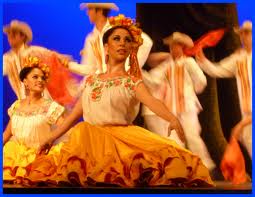
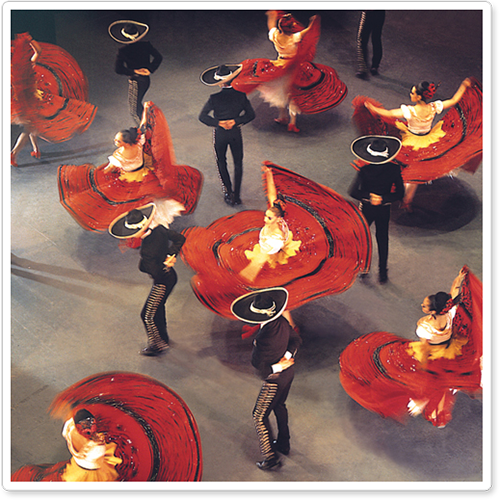
Over Veterans’ Day weekend, friends we met through Latin American Heritage Camp came to visit. And because their daughter, like our daughter, studies ballet, I bought tickets for four of us–the two girls, the other mother, and me–to a performance by Ballet Folklorico de Mexico de Amalia Hernandez. For years, I’ve heard about this company, and now that I’ve finally seen them, I can say, without reservation, if they ever come to your town, or anywhere close, run, don’t walk, to the box office  to buy yourself a ticket.

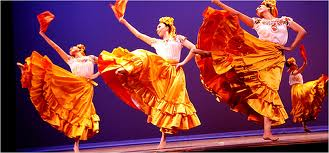
The costumes! The music! The passion! The pageantry! All absolutely fabulous.

The program notes state that Ballet Folklorico was founded by Amalia Hernandez in 1952, and numbers 76 dancers. Hernandez’s goal in starting the company was to preserve the folk dances of Mexico. That she has done, and then some. Every piece was more intricate and involved than the one previous, and just when I thought the choreography and costumes could never top themselves, out would parade a line of mariachis, or a few dozen people decked in quetzal headdresses, or a man lassoing a rope over his head in a breathtakingly display of skill and arm strength.  

The girls loved it!

My only complaint–and it’s not a complaint, really, but an observation–is that the floor of the venue stage–in this case, the Marin County Civic Center–was covered with a thick rubber mat. Alas, this is common in performance spaces, but I know from my years of tap-dancing that a wooden floor is what the intricate footwork of Ballet Folklorico cries out for. Rubber deadens the rat-a-tat-tat of the heel drops, turning them into dull thuds.

But this is a small quibble. Ballet Folklorico is a must-see, especially for families like ours. Go!

ShareThis

Latin American Heritage Camp

Monday, June 27th, 2011

I’m sitting in Chicago’s O’Hare Airport, en route to Iowa for my reading at Prairie Lights books on Tuesday, June 28 at 7  p.m.

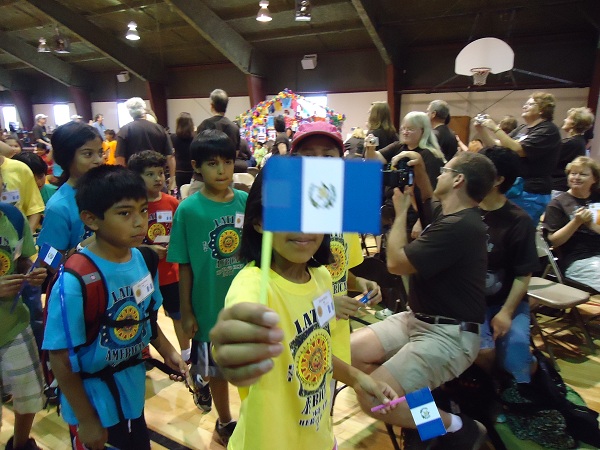
Tim and the kids have returned to California after our family participated in our fourth annual Latin American Heritage Camp. As Olivia said, I wish it didn’t have to end.  

Because I’m about to board the plane to Cedar Rapids,  I’ll copy here what I posted about the camp on my Mamalita Facebook page

I realized this week why I believe in Heritage Camp. It’s not so much the “heritage” as it is the shared adoption experience. To hear the high school students speak about the meaningful, unique, essential friendships they formed as preschoolers –and continue as teens–convinces me that this experience is vital. I hope for the same, for our children.

Got to go catch my flight. To be continued…

ShareThis

A summer day at Winter Park

Thursday, June 23rd, 2011

That’s Winter Park, Colorado, a few miles down the road from Latin American Heritage Camp, where we are headed for our fourth year of family camp for adoptive families.

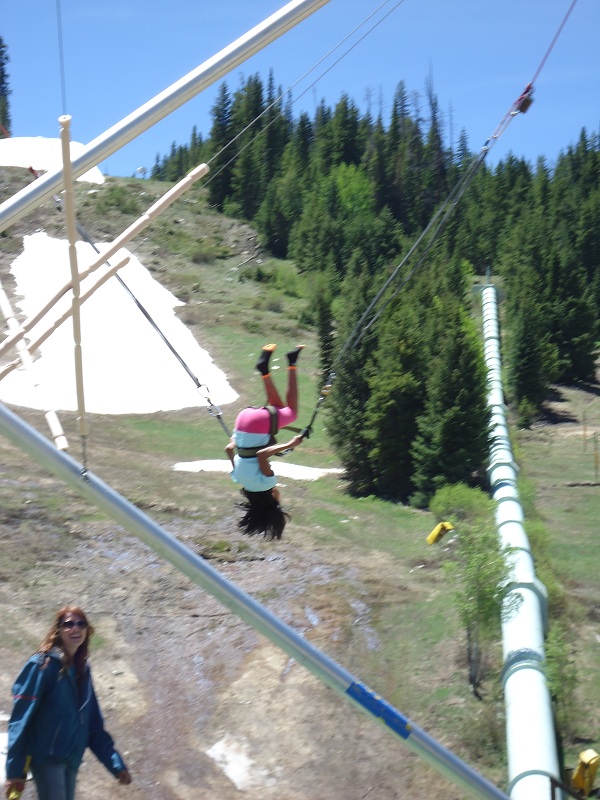
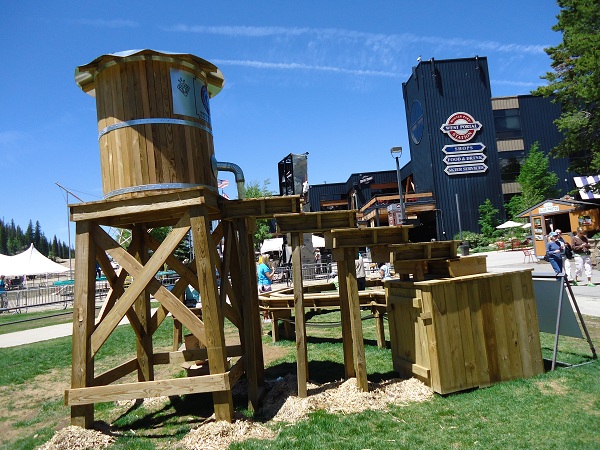
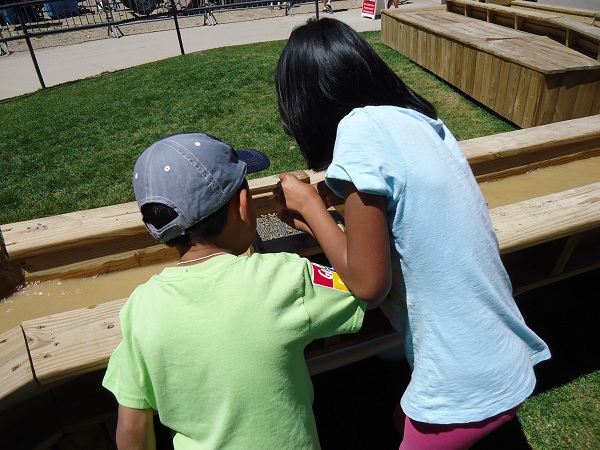
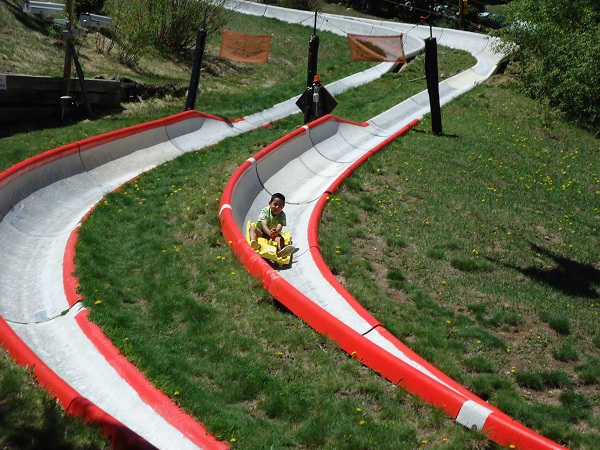
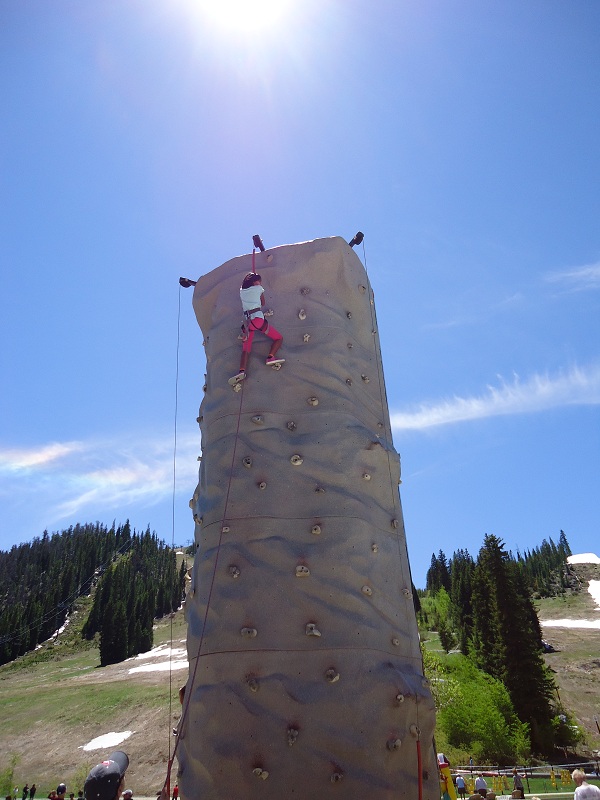
The “assay station” made a big impression. Panning for gold makes more sense after you’ve screened for your own gems. Olivia and Mateo also conquered the Alpine slide, bungee jump, zip line, miniature golf, rock wall, and the maze. Last night, the best night’s sleep ever.

In the photo above, Olivia has scaled the climbing wall, and is ringing the bell to signify her victory. Not seen in the frame is me, on a bench, white-knuckling the camera and holding my breath.

ShareThis

Summer Vacation

Monday, June 20th, 2011

No lunches to make, no bus to run for, no shoes to find, no  totes to pack. The kids are sleeping late.

Yes, today is the first Monday of summer vacation.

Last night, Olivia and Mateo rode bikes and scooters until dark while Tim and I shot hoops–as in basketball. When’s the last time we did that?

This week, we head for Colorado and Heritage Camp, where Mamalita is the book club selection–available on Kindle and Nook for easy downloading–and then I go to the fabulous Prairie Lights Bookstore in Iowa City to read on Tuesday, June 28 at 7 p.m. My friend, Gretchen B. Wright, will meet me there–Gretchen and I met at a writing workshop at Lake Atitlan, Guatemala–as will other friends through adoption.

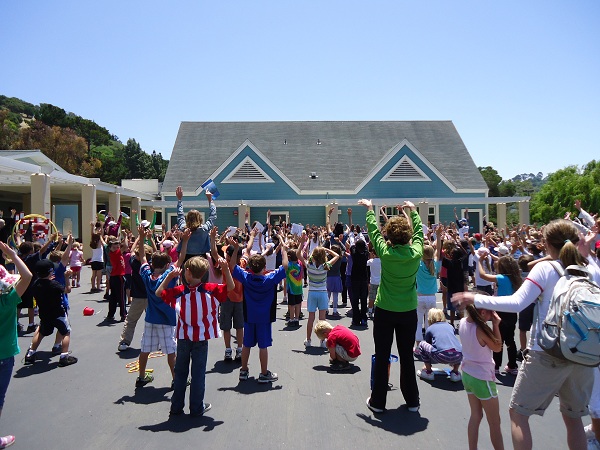
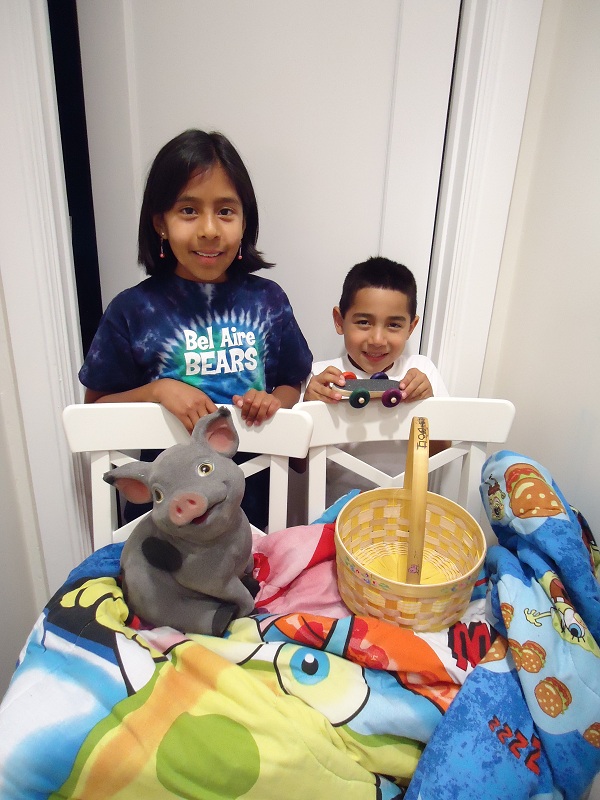
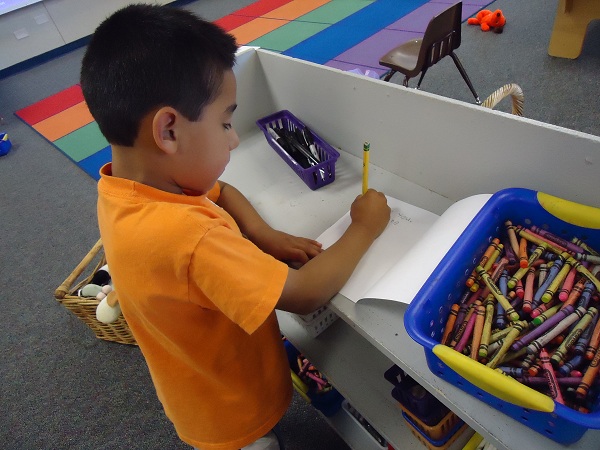
But first, a few photos. The playground at Mateo’s school, alive with students and teachers dancing to the Slumdog Millionaire anthem, Jai Ho. Olivia and Mateo presenting Tim with his Father’s Day gift, a miniature skateboard handmade by Mateo in a woodshop class, against a backdrop of their own design. And finally, Mateo drawing during his last day as a kindergartener.

Another year, gone.

ShareThis

Guatemala Part 7: Spanish School redux

Monday, February 28th, 2011

Several people have asked if I recommend studying Spanish in Guatemala. Absolutely, yes. Language schools exist throughout the country, but we only have studied in Antigua. Last August, we spent a month in Guatemala and I posted a blog about our experience at one school, San Jose El Viejo. I’m reposting the blog here. 

This summer at Latin American Heritage Camp, a panel of teen and adult adoptees dedicated a large percentage of their discussion to the importance of learning, speaking, and/or retaining the language of one’s birth country. The consensus was that language is critical if one wishes to interface with birth family, foster family, orphanage family, or, indeed, the culture at large, in a meaningful way. That’s true in my own life, as well: Speaking even elementary Spanish has allowed me to communicate with many more people in Guatemala than I would be able to otherwise.

Not that teaching a child a second language is easy. For my husband and me, it has been anything but that. Neither of us is fluent in Spanish, which is our biggest obstacle. And not only do we not employ a nanny who speaks Spanish, we rarely, if ever, hire a babysitter. Our local public school is not bilingual, and though we have a few Spanish-speaking friends, their children prefer to speak English while playing with our kids. This year, in third grade, Olivia will study Spanish. We’re lucky that it’s the second language taught in California schools. What about the kids adopted from Nepal or Russia or Ethiopia? How do they learn to communicate with others from their homeland?

The good news is that during this past trip to Guatemala, Olivia saw and understood the benefits of speaking Spanish. While listening to one conversation I carried on with someone, she said with admiration, “Mom, you speak a lot of Spanish!” Reader, believe me, I don’t. But you get the idea: In a real-life example, my daughter realized the efficacy of learning a second language. You can talk to people who don’t speak English!

Guatemala is renowned for its language schools. Here is link to a list of some of them. For the last weeks we were there, I managed to convince Olivia to attend morning classes while I posted my blog. She agreed that learning new vocabulary while drawing pictures and making figures with clay was a lot more fun than watching me wrestle with my USB flash drive at Conexion. The photo above is of her with her maestra.

For anyone who is considering Spanish school, I say “go.” Olivia attended San Jose El Viejo–because it was closest to our apartment and because the children of a woman I met through an adoption listserve were attending—and loved it. But I don’t think you can go wrong with any of them.

I’m not deluding myself into believing that Olivia speaks Spanish, or will retain any of the information that she learned. Now that she’s visited Guatemala, though, and attended school, she sees that speaking Spanish is an attainable goal, and one that multiplies her opportunities to communicate. That one outcome, to me,  makes the entire trip worthwhile.

ShareThis

Cultural awareness and Guatemala news

Tuesday, January 11th, 2011

As an adoptive parent to two children born in Guatemala, I’m often asked how I keep our children’s culture alive. After first repeating how important culture-keeping is for our family, I list some of what we do: Study Spanish, collect and study Guatemalan arts and crafts, follow Guatemalan politics and current events, listen to Latin music, eat Central American food, attend culture camp, visit Guatemala.

But is this enough? I often wonder what else I can do to keep my children’s birth culture alive.

That’s why I was very happy to find a related article by first-generation, Colombian-Argentine writer Jennifer Lubrani, a contributor to Travelojos, The Latin American Travel Blog. In the piece, ”My New Year’s Resolution: Get Cultured,” Lubrani describes the five ways she vows to learn more about her culture this year.

Learn the language.
Dance.
Celebrate Hispanic Heritage Month.
Comida, por favor.
Read.

Reading Lubrani’s list made me feel better about our efforts. Except for studying Latin dance, we are doing everything she recommends. (2011 may be the year we finally sign up for salsa.) It was also nice for me to read that even for Lubrani, growing up in a Spanish-speaking home with two biological parents, culture-keeping remains a challenge. Another good point Lubrani makes is that each Latin culture is unique, different from every other. Guatemala is not Mexico, nor is it Costa Rica. Lubrani writes:

I’m a first-generation Colombiana/Argentina. My parents migrated to New York from South America many años ago. Growing up, I was fortunate enough to have parents who taught and encouraged my siblings and I to keep traditions and customs from their homelands.

As a result, I’m bilingual and I can speak to you as if I were a bonafide “Rola” from Bogota or transition into sprinkling lots of “che” into my conversations as if I were a native Porteña from Argentina.

I’ve also come to appreciate the many traditions that are shared between both countries such as a passion for fútbol or making sure family comes above all else. However, I’ve also learned cultural aspects that make these two countries seem worlds apart.

Read the article here. (more…)

ShareThis

Spanish school

Thursday, August 26th, 2010

This summer at Latin American Heritage Camp, a panel of teen and adult adoptees dedicated a large percentage of their discussion to the importance of learning, speaking, and/or retaining the language of one’s birth country. The consensus was that language is critical if one wishes to interface with birth family, foster family, orphanage family, or, indeed, the culture at large, in a meaningful way. That’s true in my own life, as well: Speaking even elementary Spanish has allowed me to communicate with many more people in Guatemala than I would be able to otherwise.

Not that teaching a child a second language is easy. For my husband and me, it has been anything but that. Neither of us is fluent in Spanish, which is our biggest obstacle. And not only do we not employ a nanny who speaks Spanish, we rarely, if ever, hire a babysitter. Our local public school is not bilingual, and though we have a few Spanish-speaking friends, their children prefer to speak English while playing with our kids. This year, in third grade, Olivia will study Spanish. We’re lucky that it’s the second language taught in California schools. What about the kids adopted from Nepal or Russia or Ethiopia? How do they learn to communicate with others from their homeland? (more…)

ShareThis

Goodbye to Heritage Camp

Wednesday, June 30th, 2010

Heritage Camp ended with a closing ceremony in which a dozen or so campers talked about the positive impact camp has made on their lives, in addition to being so much fun. One of my favorite observations came from an adoptive father who read a poem he’d written. I don’t have his words in front of me, but the gist of it was how Heritage Camp is about each child finding his or her own voice, and feeling confident enough to use it. Exactly. (more…)

ShareThis

Continental Divide

Thursday, June 24th, 2010

Tim, Olivia, Mateo, and I landed in Denver airport yesterday afternoon, en route to Latin American Heritage Camp. As I mentioned in a previous blog post, Latin American Heritage Camp is designed for children born in Central and South America and their adoptive families. Heritage camps exist for children adopted from most places around the world. Attending is one of our favorite traditions. This is our third year.  (more…)

ShareThis