Posts Tagged ‘Guatemalan adoption’

Semana Santa 2013. A visit with Olivia’s birth family

Friday, April 5th, 2013


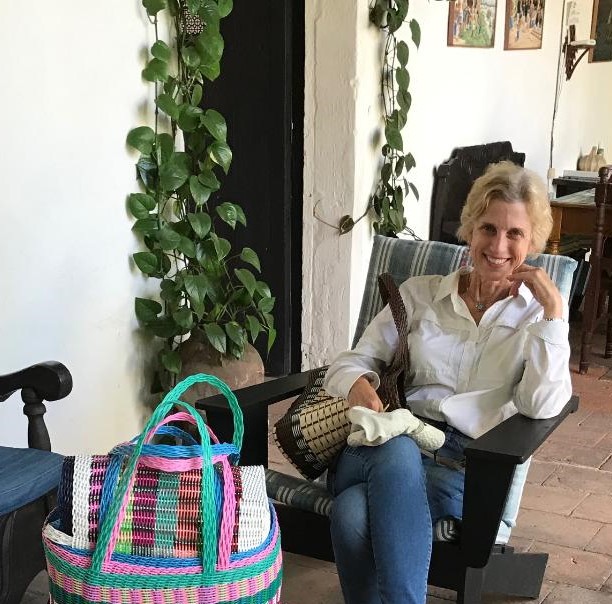
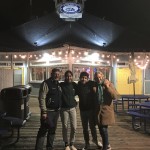
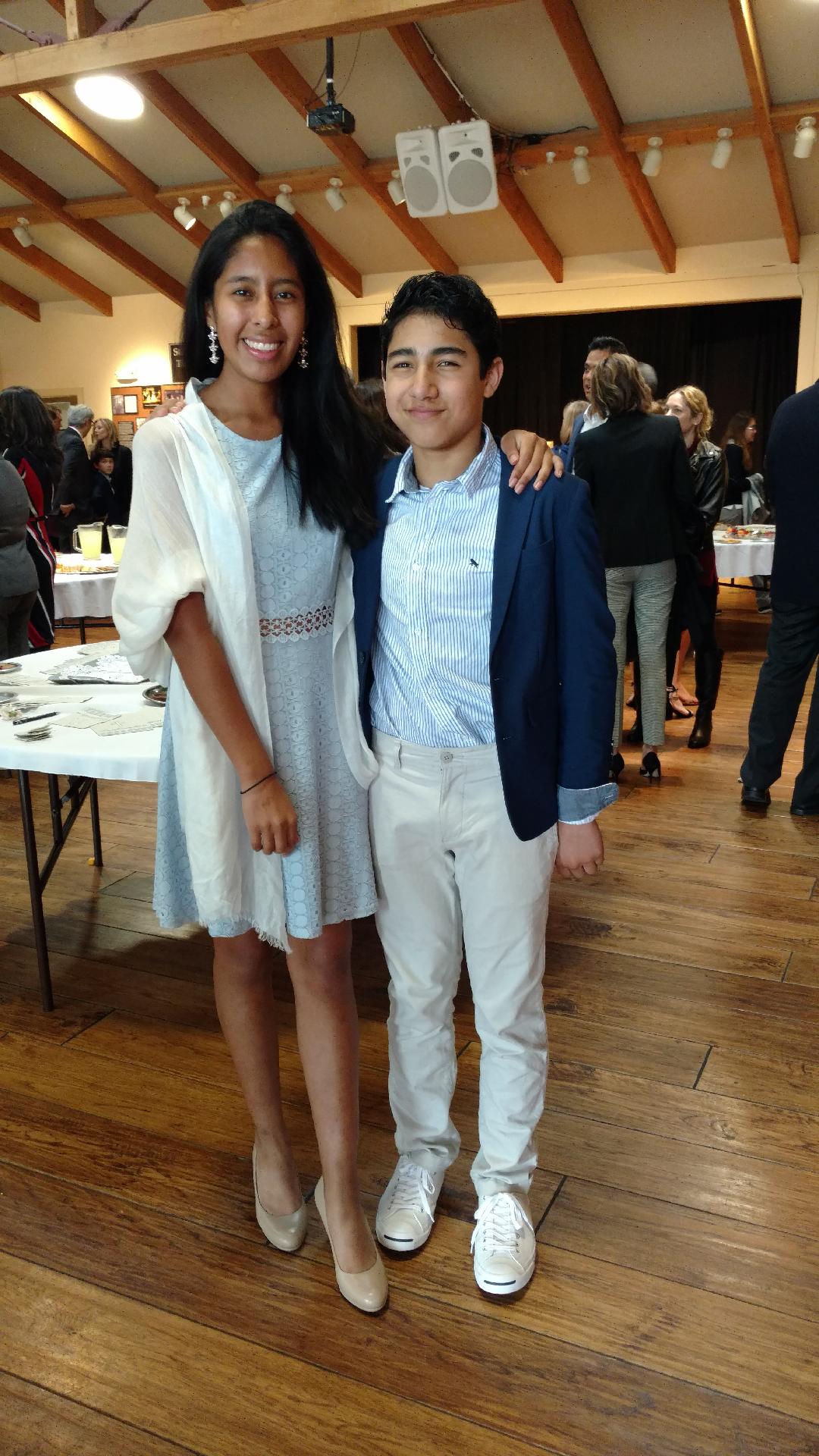
This week, we met with Olivia’s birth family in Panajachel, a town on Lake Atitlan about three hours northwest of Antigua. The family—Olivia’s birth mother, “Ana”; her grandmother, Abuela, and her older brother and sister, now 18 and 16—traveled to Pana by bus from where they live in Totonicapan. Opinions around the subject of international adoption are mixed in Guatemala, ranging from supportive to very negative, so to protect Ana’s privacy we always meet in Pana, two hours from her town. (In small villages such as the one where they live, outsiders never pass unnoticed.) As you can see from the photo, Olivia is almost as tall as Ana, and about the same height as Abuela. Olivia had just turned seven the first year she met her family; next month she will be 11.

This meeting was a little different from our previous ones for two reasons: first, because my sister Patrice usually accompanies us on birth family visits and couldn’t this time. (We missed you, Tia!) And second, because Abuela’s shoulder was bothering her so much she couldn’t move her arm to do anything, including lift a fork to eat. The lightest touch caused her to wince with pain. Bear in mind, this is a woman who for decades has chopped firewood, hauled water, made tortillas, and washed thousands of loads of laundry by hand.

Olivia wanted to take a boat ride to another village on Lake Atitlan—she doesn’t like to feel conspicuous in “our” town of Panajachel—so we did. As usual, our first stop was to pray together in the town’s Catholic church, and may I just say that the faith and goodness of Olivia’s birth family absolutely humbles me.

Afterwards, we ate a nice lunch, over which we perused the photo albums from last year’s visit that I had assembled and brought. But none of us could ignore Abuela’s obvious suffering. Trying to ascertain the exact nature of the problem, I could make out the Spanish word for “bone,” although nothing about a fall or injury. As far as I could determine, a visit to their local clinic in Toto hadn’t revealed a root cause.

Long story short, I called Nancy Hoffman, my fellow adoptive mom who owns a travel agency in Antigua, and she said the desk clerk at our hotel knows a good doctor. Turned out he does: Dr. Luis de Pena, the physician who runs the clinic at Mayan Families, the NGO many of us adoptive families support, and where, in fact, I had been last month with Mateo, dropping off shoes donated by Olivia’s Girl Scout troop.

Our group clambered onto the next boat to Pana, piled off and into two tuk-tuks, and zipped up to Mayan Families.

After a physical exam, Dr. de Pena made a diagnosis: bursitis. If the injection he administered doesn’t work—he sent me out to buy the syringe from an NGO-subsidized pharmacy around the corner and two blocks down, “Fe, Salud y Vida”—and other causes are ruled out, Abuela may need surgery. This only can be performed in a hospital by an orthopedic surgeon, and in Guatemala, apparently, orthopedic surgeons’ numbers are few. If necessary, Abuela must travel to Guatemala City or Quetzaltenango.

Today’s report is that the pain has subsided somewhat. We’ll see.

What I appreciated most about this visit was how natural it felt. Abuela was in pain, and we did our best to help her feel better. That’s what family does, and we’re family.

ShareThis

Our front door in Antigua

Wednesday, March 27th, 2013


Olivia and I in Antigua, and the front door of the house where we lived when I fostered her in 2003.

Us in 2003.

For us, no visit to Antigua is complete without a pilgrimage to this place.

So happy to be here! ~

ShareThis

The next visit

Friday, March 22nd, 2013

I feel guilty even writing this but I’m gearing up for another trip to Guatemala. For close to a decade, I’ve promised myself that one of these years I’d be in Antigua for Semana Santa, the holy week that leads up to Easter. That year finally has come. Only Olivia and I are going; my husband and Mateo will hold down the fort here. For the past weeks, I’ve been accumulating small gifts for Olivia’s family there, which is always fun. By now I know their favorite colors and tastes, the things they like and what they need. Our gigantic suitcase is filled.

The best part is putting together the photo album from the previous year’s visit. I love watching Olivia and her family page through it together, laughing at some remembered event—Dulce getting a ribbon woven into her hair, or Santiago eating an ice cream cone at Pollo Campero. Everyone will remark on how tall Olivia is compared with last year, and how her hair is still beautiful, but different. I’ll be amazed at how much her brother and sister have grown up, and delighted to see the family look happy and healthy.

A big part of loving someone, I think, is sharing a history with them. How grateful I am that we’re able to help Olivia create a history with her birth family. How lucky I am to watch it develop.


ShareThis

Mateo’s new suit

Friday, March 1st, 2013

If you’ve been reading this blog for a while, you’ve probably figured out that I’m Catholic, and my husband and I are raising our kids Catholic. What does that mean, exactly? A lot of things, which I won’t go into here because I believe every religion is valid and to be respected, as is the choice of no religion at all, by the way, and I’m not telling this story as a platform to discuss my faith.

No, my reason for bringing up Catholicism is to share the experience of buying for my son Mateo his very own First Holy Communion suit, from the charming purveyor of First Holy Communion suits in the photo above, who practices his fashion genius somewhere in the depths of the municipal mercado in Antigua, Guatemala.

In February 2012, Mateo and I had bought a suit from the same distinguished gent, intending to save it for the Sacrament this April. What we hadn’t counted on was Mateo’s growth spurt, which  steered the original suit pants and jacket dangerously toward clown costume territory.

But try finding the same tailor in the maze of the mercado! My remembered directions sounded like this: “Walk down the right side aisle, through the section with the pirated DVDs, past the candles and flowers and soccer balls, turn left at the section with the raw meat hanging, through the wrapping paper and baskets and candy, past the shoes and wallets and leather belts, beyond the place with the sacks of rice and beans and the guy who sells machetes. Somewhere around that.”

Fortunately, the lady in the First Communion dress section knew exactly where the tailor who sold First Communion suits was headquartered, and she kindly escorted us to the proper stall. Success!

Not shown here are the suit’s handsome complementary items: the white ruffled shirt, the black bow tie. For that, we’ll have to wait for Mateo’s First Holy Communion “big reveal.”

Stay tuned. ~

ShareThis

Guatemala, Guatemala. February 2013

Monday, February 25th, 2013

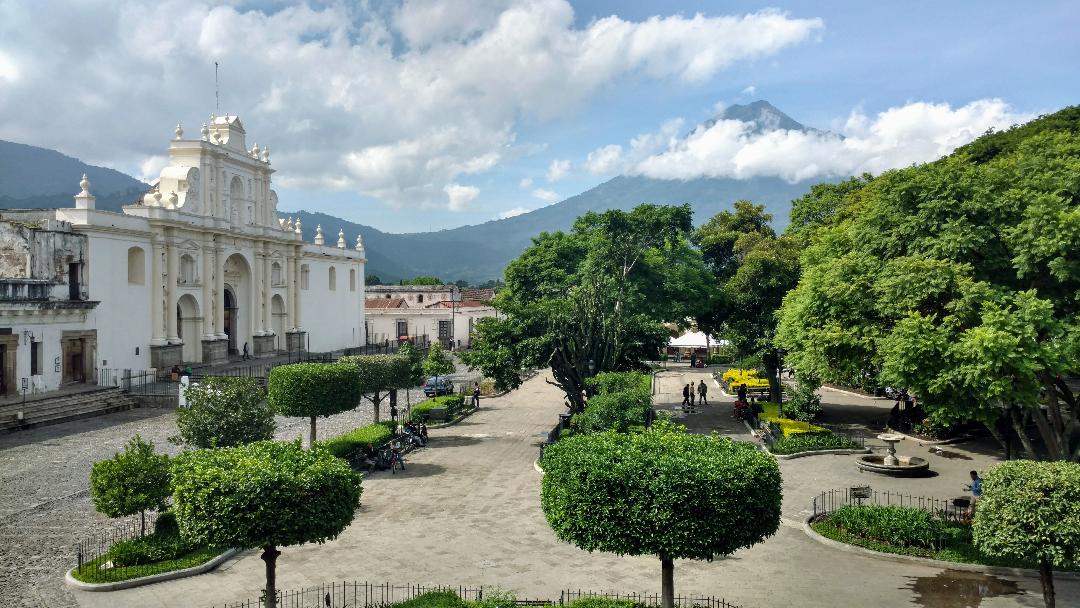
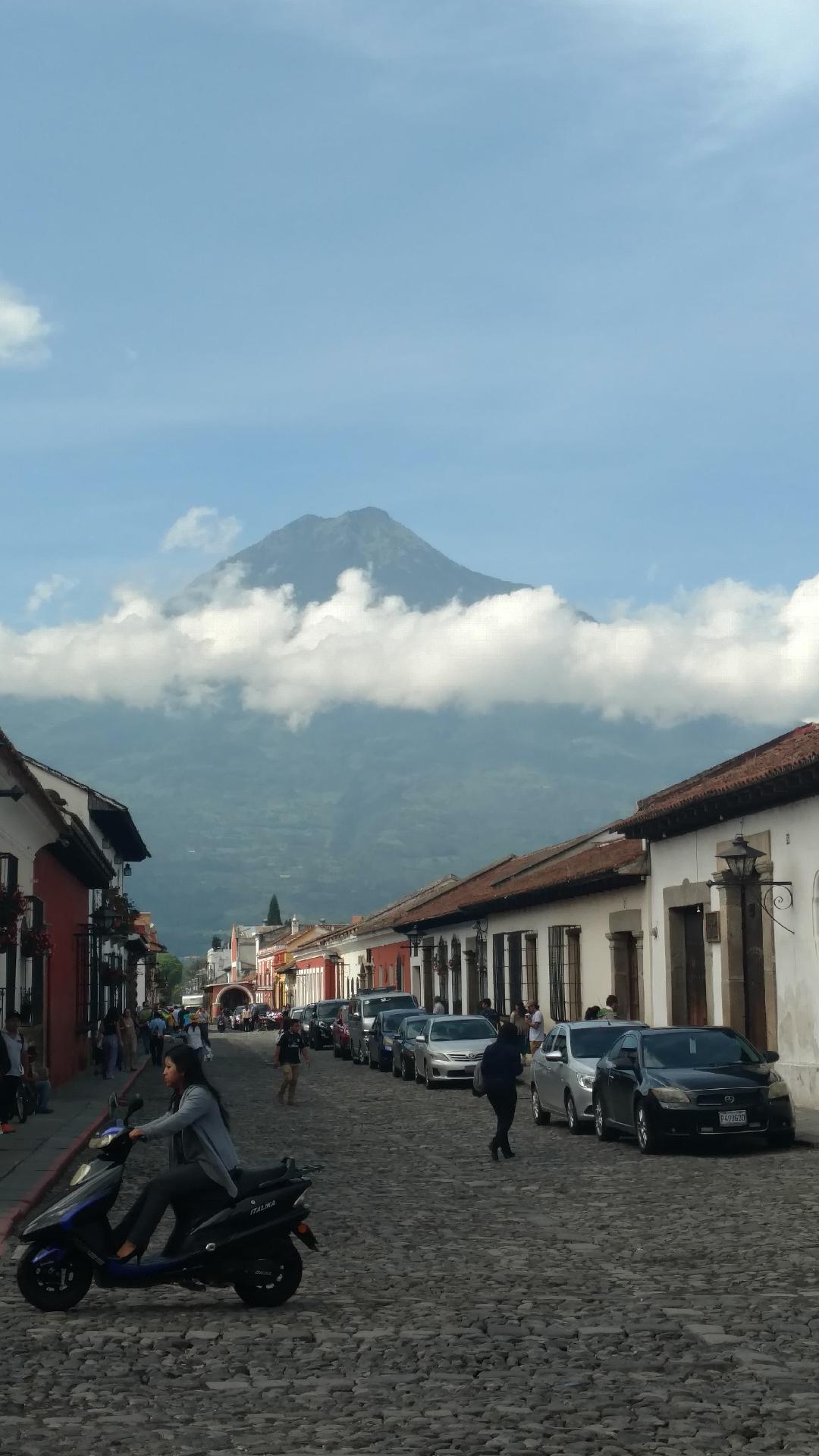
Last Saturday, Mateo, my sister Patrice, and I arrived in my favorite place on earth, Antigua, Guatemala. It’s insane how much I love Antigua—the colonial architecture and cobblestone streets, the ring of volcanoes, the churches, the Square. We’ve been visiting Antigua since I fostered Olivia there in 2003, and every trip we discover something different. This time, we climbed Volcano Pacaya, an extraordinary adventure that deserves its own post, and will get one soon. We also spent two days at Lake Atitlan, my other favorite destination. Olivia’s Girl Scout troop collected some 75 pairs of gently used kids’ sneakers, soccer cleats, and shoes, which Mateo, Patrice, and I lugged down on the airplane, and hand-delivered to Mayan Families, an organization we support that serves indigenous families in the region. Pictures on that adventure to come, too.

This trip, we connected with three other adoptive families visiting Antigua, two with eight-year-old boys, and one with a younger girl. The girl’s family I had met virtually, through our mutual membership on an adoption listserve; I know the boys’ families through our local adoption group. I mention this as another benefit of forming adoption networks—when you visit Guatemala, you can meet up with friends. Mateo loved sharing meals and fun with all three kids. And let me tell you, for an active, eight-year-old boy, scaling Pacaya with two other active, eight-year-old boys qualifies as downright awesome.

The fabulous Nancy Hoffman, who has lived in Guatemala for more than a decade and is known to most of you reading this as the founder of guatemalareservations.com, helped us with arrangements. If you’re planning to visit, contact her at Nancy@GuatemalaReservations.com and she’ll set you up.

The Saturday before we left, we visited friends who live in one of the small villages surrounding Antigua. After a lovely afternoon, on the way back to town, we passed local residents creating alfombras (carpets made of sawdust and various materials) outside their homes and businesses for the village’s Lenten procession later that night. The artists kindly indulged us by letting me take pictures while Mateo inspected their handiwork, delighted to take part in the local tradition.

Our trip consisted of dozens of such small, unexpected moments, which already have entered the realm of treasured memories. To me, those treasured memories are what give life meaning. I feel lucky to share them with my son Mateo, in his beautiful birth country of Guatemala.

ShareThis

Our adoption peeps

Wednesday, January 30th, 2013

One of the best parts of writing a book about adoption is that I get to meet a lot of people connected to adoption. Two years ago at Heritage Camp in Colorado, I met my now-friend, Caroline, who said she, like me, lived in the Bay Area, and would I be interested in attending a meeting of her adoption-group book club to discuss Mamalita?

Naturally, I accepted. (And by the way, if you live anywhere remotely close and would like me to talk with your book club, please send an email because of course I will!)

When I arrived, the most lovely, smart, and interesting array of women welcomed me into their fold for an afternoon chat-fest. The conversation started with my book, but soon drifted to their stories and journeys; feelings about parenthood, children and families; and our lives now. You know how, occasionally, you meet someone and you just ”get” each other? This rarely happens for me. When it does, I pounce.

“Are you accepting new members?” I asked. “Because if you are, I’m in.”

Tim, Olivia, Mateo, and I have been meeting with the organization for more than a year now, once a month, usually at someone’s home. Everyone brings food to share. We mingle, nosh, and catch up for about an hour while our children run around, then a small band of hardy souls—Dads, mostly, but also Moms–herd the kids to a backyard or playground for another two hours while the book club dissects the latest selection. Afterwards, we re-assemble for dessert.

The absolute best part of belonging to the group is watching our children’s friendships develop. Both Olivia and Mateo love to play with the other girls and boys, not only because they’re all adopted from Central America, although that’s a wonderful benefit, but because they have fun.

Last Saturday, one of our number, Michele, hosted our big annual gathering at her family’s church. Another member, Dara, constructed a homemade pinata to represent a Guatemalan bus, and everyone brought food, crafts, and good cheer. Our fearless leader, Sheryl, organized.

Wherever you live, find a community! If one doesn’t exist, create one. That’s what my friend Cindy Swatek did in Missouri, with her fantastic MOGUATE. Trust me: the effort, schedule reshuffling, and travel time will be forgotten as you sink into the comfort that comes from being among people who share the specific experience of being touched by adoption.


ShareThis

Learning by listening

Thursday, January 24th, 2013

Recently, two articles about the ways adoptees are affected by adoption made a big impression on me. The first, Adoptee View: What Can a Tiny Baby Know? by Karl Stenske, recounts the trauma experienced by babies who are separated from their birth mothers. The second, Primal Wound Author Speaks on Adoptee Challenges, an interview conducted by Nancy Axness with Nancy Verrier, discusses the phenomenon of the primal wound—that is, the deep and lasting hurt felt by people who are relinquished for adoption. Verrier is the author of The Primal Wound and has written and spoken extensively about this concept.

As an adoptive parent, I finished the articles wondering “Are my children doomed to a lifetime of pain? Can I do anything to help them heal from their primal wounds?”

Then, this week, a friend sent me a link to a post titled Adopter Savior Syndrome (A.S.S.), on the blog Coloring Out Lori Jane. The first few paragraphs left me nearly gasping for air:

What is Adopter Savior Syndrome (A.S.S.)?

A.S.S. is a highly contagious and devastating disease that is estimated to be found in millions of White adoptive parents and White adoptive prospective parents around the constructed Western world. Adopter Savior Syndrome is not yet fully understood, though it is speculated to be a White disease that is particularly pervasive among desperate wives and cisgender men with Yellow Fever… Ask your adult Adoptee about A.S.S. if you experience the urgent and persistent need to adopt in order to become a complete person.

And that’s only the first hundred words. You must read the whole post to gain the full impact. Better yet, read all of Lori Jane’s posts to understand the depth of her sorrow and rage at being a Korean baby removed from her birth country and adopted by white American parents. Through her writing, Lori Jane expresses pain related to a primal wound that feels acute and devastating.

After reading these three essays, I was tempted to take to my bed, overwhelmed by inadequacy. Then I realized: I’m my children’s mother. Even if I wanted to, I don’t have the luxury of saying “This is too hard! I give up!” So inside of hiding under the covers, I went outside for a walk, and the fresh air made me think: “What can these writers teach me? Are there lessons to be learned from each of their experiences? How can I try to do better for my children?”

One of life’s realities is that many families face challenges. Illness, a physical or mental disability, poverty, insecurity, anxiety, alcoholism, physical or mental abuse, isolation, fear. One of the realities of our home is that we—my husband Tim and I, and our children, Olivia (10) and Mateo (8)–are a transracial adoptive family. Among Tim and my duties as parents is to help our children navigate that experience. We strive to give our kids a context where they feel comfortable with their adopted-ness.

During my walk, I thought of a list of ways Tim and I—and literally hundreds of other adoptive parents we know—try to foster healthy attitudes toward adoption, Guatemala, and our family. I don’t pretend that this list, or we, are perfect, or even the best solution. Nor do I pretend our methods can heal the indelible scars of the primal wound. My list serves merely as a place to start:

We talk about adoption. A lot. From the moment we first held our babies in our arms, we’ve told them their adoption stories: “You were born in another mommy’s tummy.” Our conversations continue today: “How did you feel about meeting your birth mom? Anything you want to talk about?” We don’t wait for our children to ask questions, although we are happy when they do. We keep the channels open by bringing up the subject ourselves.

We study Spanish. Personally, I’m terrible at it, but the point is I try, and my children appreciate the effort. We honor our children’s heritage, and that includes studying the language that people in their native country speak.

We visit Guatemala. This is easy for us, because we love the country. Yes, it’s an international flight to Central America. We can’t drink the water or eat the lettuce. Sometimes we worry about our safety. But those inconveniences are insignificant when compared with our children’s joy at getting to know their birth country, and feeling at home there.

We go to Heritage Camp. In many adoption circles, heritage camp is criticized as a faux experience where families learn to make tortillas and black beans. In fact, Heritage Camp has less to do with “heritage” than with our children connecting with other kids who share a very specific experience: being adopted, being a foreign-born person in the United States, having a skin color/religion/cultural history/interest set/talents/desires/that may be very different from one’s adoptive parents and peers.

At home, we create a local network of other adoptive families, with whom we meet monthly. We view this as our own mini-heritage camp. (See above.) Given a choice, we will always choose the dentist, healthcare provider, church leader, and teacher who looks like our kids.

We searched for and found our children’s birth mothers. Finding “Ana” and “Lety” perhaps hasn’t “healed” for our children what Nancy Verrier calls the primal wound, but it has gone a long way toward filling in the blanks about who they are and where they come from. My kids feel loved by their birth mothers, and seem to understand the circumstances that compelled each of these women to do what they did, which is place their children for adoption.

We embrace the unease. We tease it apart and analyze it. One day, Olivia said to me, “Really, I should be living in a village and speaking Spanish and K’iche. I should be wearing traje (Guatemala’s native dress).” Instead of feeling rejected or threatened, I validated her feelings by suggesting she address the dichotomy she feels in a painting. (Olivia is a talented artist.) Immediately, she planned a self-portrait that showed her split down the middle: half in everyday clothes, half in traje, against a background of part suburban California and part Guatemalan countryside. We both agreed that adoption likely will inform Olivia’s art for many years to come.

Finally, we honor our children’s birth country by supporting organizations that help women, children, and families who live there—a feeding program, a convent, a home for the elderly, a high school student sponsorship, a program for teachers, and birth family support. Our actions show our children that we care about the future of Guatemala.

That’s my list. If anyone has any other suggestions or comments, please feel free to share them with me. I learn best by listening.

ShareThis

Obsession

Thursday, January 17th, 2013

I have to tell you, at least several people known to me wish I were a little less obsessed with the subject of adoption, and one of the most vocal of these lives in my own home. I’m not naming names, but last night, again, this person said to me, “Mom, why can’t you leave the house like other mothers? Join a gym or meet someone for coffee. Go shopping. Think about any topic except adoption and Guatemala. Do something besides write. Please!”

I don’t disagree. Because, honestly, I’m not sure what drives my obsession or why I believe it possibly can do any good. But then, earlier this morning, I read an article titled “Romanian orphans face challenges decades after adoption,” which includes these sentences:

The Bucharest Early Intervention Project (BEIP) has studied the effects of institutionalization on orphans in Romania for the past 13 years. Working from a small lab in a former Bucharest orphanage, researchers from the US and Romania have compared children growing up in institutions with those living with families.

“We found that institutions are a particularly toxic environment in which to raise young children,” says BEIP’s lead researcher Charles Nelson, a professor of pediatrics and neuroscience at Harvard Medical School.

Institutionalized children exhibit everything from reduced IQs to reductions in brain size and activity, he says.

The researchers say that although any time spent in non-family situations is harmful, their work suggests institutionalization past the age of 2, and in some cases earlier, causes irreversible effects.

That’s grim news for the 8 million children UNICEF says are living in institutions worldwide today.

… I read those paragraphs and thought, Somebody’s got to care about this. Somebody’s got to pay attention, and think about this, and write about it, until more people pay attention and change is made.

For now at least, one of those somebody’s seems to be me.

And based on the evidence—the recent Russian protests against Putin’s adoption ban; the countless news reports and blog posts about the reformers, filmmakers, and aid workers who continue to work toward ethical and transparent adoption; my conversations with fellow adoptive parents whom I know personally and virtually, who are doing their best to raise great kids while staying connected to birth culture and birth family; my chats with friends who are not associated directly with adoption, yet still care about the plight of children without parents around the world—I realize, in a deep and very encouraging way, obsessed I may be. But I am not alone.

Today, for my family’s sake, I will get out of the house. Maybe run over to my favorite local bookstore and see if there are any new books about adoption. Or Guatemala. Or even better, both.

xoxo

ShareThis

The Russian adoption ban

Saturday, January 5th, 2013

The Russian adoption ban. What’s to be said? That it dooms hundreds of children who might have been adopted to a life lived inside the four walls of an institution. The reality is almost too heartbreaking to think about, except that, around the world, millions of children have no other choice.

Here are links to two articles that I found compelling. The first, because it describes conditions inside orphanages in Russia; and the second, because it addresses the ramifications of summarily closing a country’s international program.

Russia’s Adoption Ban Is Cruel and Vindictive to All, by Dr. Jane Aronson in the Daily Beast.

Russia’s Adoption Ban Plays Politics with Most Vulnerable, by KJ Dell-Antonia in the New York Times.

I’m pasting here the text of a letter to the New York Times, written in response to a Times cover story about the situation, because the same can be said about the waiting children and families of the Guatemala 900.

Many facets of international adoptions are debatable, but one is not. Stopping nearly complete adoptions is cruel. To let human bonds form and then destroy them shows a level of callousness uncommon even for politicians.

When an American adoptive mother sent her child back to Russia with a note saying she was abandoning him, Russians were rightly outraged. Treating children as objects is offensive. Treating them as political pawns is no less so.

ILYA SHLYAKHTER
Cambridge, Mass., Dec. 28, 2012

Amen, and Is anybody listening?


ShareThis

My essay in the NY Times Motherlode

Monday, December 10th, 2012

On Monday, the New York Times Motherlode blog published my essay, An Adoptive Parent Won’t Take the Blame. As a former Jersey girl who grew up reading the Times, I am honored.  As an adoptive parent who feels her voice often gets muffled by the screaming that surrounds the subject of adoption, I also am thrilled, big time.

The comments following the article are enlightening. As I expected, not everyone shares my point of view, and they’re forthright about their reasons why. But if that’s the price I must pay for speaking honestly and rationally, so be it. No complaints here. 

Here are the first few paragraphs:

I’m the adoptive mother to a daughter and a son, ages 10 and 8, both born in Guatemala. Three years after my daughter came home, in November 2006, The New York Times ran an article blasting Guatemala’s adoption system, calling the country a “virtual baby farm.”

Two years later, in January 2008, Dateline NBC showed hidden camera footage of my adoption facilitator plying his trade in the lobby of a Guatemala City hotel, in a segment titled, “The Baby Broker.” In Northern California where I live, a man from Central America recently asked me, “How much did you pay for your kids?”

More recently, a front-page article in The Times told the story of a Reno, Nev., family whose adoption case stalled when allegations of corruption shut down the system. Many of the comments left by readers made me feel like a guilty criminal, simply because I’m an adoptive parent.

The question for me is, “How do I make sense of something that is both the best thing that has ever happened to me — becoming a mother through adoption to my two beautiful children — and the most troubling — becoming that mother by accessing a system that is now known to be so corrupt that it was, in fact, closed in December 2007?”


Click on the link and read the rest to see if you agree with my conclusion.


ShareThis