Posts Tagged ‘Guatemala 900’

Guatemala 900, still waiting

Friday, May 18th, 2012

Since I began blogging, I’ve logged many posts on the group known as the Guatemala 900, American families waiting to finalize the adoptions of the Guatemalan children to whom they’ve been matched. Now numbering around 300, the Guatemala 900 cases have been stalled since the shutdown of adoptions between Guatemala and the U.S. in December 2007, nearly four-and-a-half years ago. Since then, the waiting children have remained in care in Guatemala, while their adoptive families support them from afar in the U.S.

On May 10, 2012, Senator Mary Landrieu hosted a public conference call, in which the Senator relayed information about her most recent trip to meet with Guatemalan officials to discuss the pending adoptions, and her plans to advocate for families in the future. On May 14, the State Department issued its official statement on the conference call and the current situation; you can read about it here.

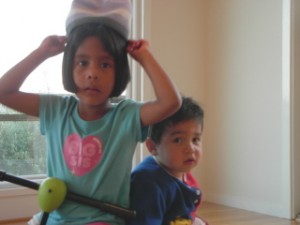
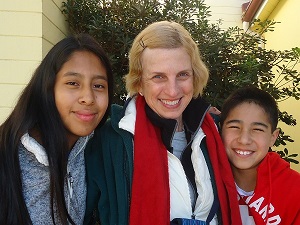
In the meantime, I’ve posted two photos of my children, one taken in November 2007, and the other taken a few days ago, to demonstrate how long four-and-a-half years means in the life of a child.

After hearing Senator Landrieu deliver the news of how little progress has been made in the last four-plus years, the temptation for me would have been to run sobbing from the room, giving up all hope of resolution. Yet the families of the Guatemala 900 soldier on, believing that one day soon their cases will be finalized.

I just want to say, again, how much I admire the Guatemala 900, for their loyalty to the children they understandably consider their own, and for holding fast to their dreams of providing those children with permanent, loving families.

ShareThis

Open Letter from Dr. Jane Aronson to President Bill Clinton

Sunday, March 20th, 2011

 I saw Dr. Jane Aronson’s open letter to President Clinton on another blog, Whatever Things Are True. Dr. Aronson is founder and CEO of Worldwide Orphans Foundation, and writes with the authority of a physician involved in international adoption for some twenty years. Her message is so passionate I’m also printing it here, in the hopes of adding to the letter’s readership. Dr. Aronson’s subject is the recent news about adoption from Ethiopia, and her interpretation of its meaning.

March 13, 2011

An Open Letter to President Clinton 

Once again, tragedy strikes orphans  – children who might have been adopted into a permanent home have had their hopes and dreams demolished.  This time it’s  Ethiopia, where international adoption has been growing rapidly over the last six years, beginning with a handful of older children in the 1980’s and 90’s.  By last year 2,500 children – sweet babies and toddlers – were adopted by American families.

Now, the Ethiopian government has announced that it is reducing the number of visas approved for adoption from 50 per work day to five. The outcry from those waiting to become parents, from adoption agencies and from not for profit organizations advocating for children, is predictable and equally predictable, the world at large appears to be indifferent to the anguish this ruling is causing.  And so, the numbers of children adopted from Ethiopia will decrease, the time it takes to adopt will increase, and international adoption in general, and the children in particular, are the losers. (more…)

ShareThis

Why we won’t be trick-or-treating for UNICEF this year

Thursday, September 30th, 2010

Like a lot of people, I used to regard UNICEF as an organization founded to protect and advocate for children. Not anymore. Not after everything I’ve learned about UNICEF’s role in shutting down adoptions in countries such as Guatemala. That’s why I’m sharing  this article by attorney Candace O’Brien, posted by friends on Facebook, and encouraging you to do the same.

In this post, I’ve included only the parts specific to Guatemala; to read the entire article, click on the link here

“UNICEF has been waging war against international adoption for many years contrary to popular understanding… UNICEF’s premise that parents in underdeveloped countries should be provided the means to keep their children is not arguable.  Neither is UNICEF’s stance that international adoption should only be a last resort.”…

“Let’s take the example of Guatemala.  After intense pressure from UNICEF, Guatemala finally closed its doors to international adoption on December 31, 200[7].  Prior to that time, foreign nationals adopted approximately 5,000 Guatemalan children per year.   Oscar Avila, ‘Guatemala Seeks Domestic Fix to Troubled Overseas Adoptions,’ Chicago Tribune, October 26, 2008 indicated that ‘Guatemala has launched an ambitious campaign to recruit foster parents and even adoptive parents at home.’  So far, the program is failing miserably.  Avila reports, ‘Only about 45 families in a nation of 13 million currently have taken in foster children since the program began this year.’”

“The approach that Guatemala is taking by attempting to gain domestic attention to the problem is certainly meritorious; however, this approach could and should have been implemented concomitant with an international program which would ensure that thousands of children will find homes rather than waste away in institutions that are often underfunded, understaffed and unable to provide for the needs of these children.”… (more…)

ShareThis

How a California garden is like adoption

Friday, September 17th, 2010

In September, all the work we’ve put into the garden during the past year finally pays off. Tomatoes, strawberries, Meyer lemons, basil. In sauces and gazpacho, smoothies and pies. Sliced onto cereal, on ice cream, broiled with parmesan cheese. Meyer lemons, Meyer lemonade. And Pesto! Pesto by the quart. On pasta and bread. Pesto for lunch and for dinner. Buckets of pesto. 

Summer comes to Northern California not in July or August, but in September. The days are warm enough, at last, to turn our tomatoes red, our lemons yellow. Before breakfast, Tim goes out with a basket, and by the time I wake up the kids, a bowl on the table is filled. 

Because I am who I am and my husband is married to me, we see parallels between our garden and adoption. Tim noticed it first. In Texas, where he once lived, there are four seasons. Everyone, he says, plants tomatoes the same week; gardeners can predict their harvest to the day. But here in California, we plant in February, March, April, or May. Our tomatoes come in, variably: maybe in August, or else in September. Some years, we eat tomatoes off the vine at Thanksgiving. 

How is a California garden like adoption? As Tim pointed out, a normal pregnancy takes nine months. With a pretty good degree of accuracy, expectant parents know when their baby will arrive. There is no such calendar with adoption. Maybe it will take six months, unless it takes two years. For the families still waiting for their children in Guatemala–whose cases have been stalled since adoptions closed in January 2008–it must feel as if it will take forever. 

Guatemala 900, we’re thinking of you as another season passes.

ShareThis

International adoption statistics

Sunday, August 1st, 2010

Being in Guatemala made me wonder about the statistics for international adoption. Adoptions are closed here, of course, although several hundred cases are still pending. I found this blog post by Angela W on an adoption website, Adoption Under One Roof. In it, Angela W analyzes the 2009 statistics—the most recent available— in a way that even I found easy to understand.

Adoptions from Asia continue to make up the largest percentage of international adoptions, at 47%, while adoptions from Africa are the fastest-growing: 21% in 2009, up from 9% in 2007 and 13% in 2008.  (more…)

ShareThis

The Guatemala 900 Campaign

Friday, June 18th, 2010

Adoptions from Guatemala closed on January 1, 2008. At that time, some 900 cases started by U.S. citizens hoping to adopt children from Guatemala were still pending. As of this writing, about 400 cases remain unresolved. That means that 400 children have spent, at a minimum, the past two and a half years in orphanages, waiting to join their new families.

Guatemala 900 is a grass-roots campaign initiated by the original 900 adoptive families to call attention to this situation. Thanks to their efforts, a letter co-authored by Senators Frank Lautenberg (NJ), Barbara Boxer (CA), and Russ Feingold (WI) garnered 73 Congressional signatures and will be sent to top-level government officials in Guatemala who play instrumental roles in the adoption process. According to Guatemala 900′s website, the letter “respectfully requests the Guatemalan government take steps to institute a transparent and predictable process for all pending adoption cases.”

I’ve posted here a photo of my children, taken in late 2007. To see how much they’ve changed since then is to realize what two and a half years means in the life of a child. To the waiting parents of those 400 children, I offer my solidarity. To learn more, visit the Guatemala 900 website:

http://guatemala900.org/wp/

ShareThis