Posts Tagged ‘international adoption’

“The Child Catchers” by Kathryn Joyce

Thursday, May 2nd, 2013

I recently read Kathryn Joyce’s The Child Catchers: Rescue, Trafficking, and the New Gospel of Adoption. The book’s premise can be summarized by this excerpt from the description on Kathryn Joyce’s website:

To tens of millions of evangelicals, adoption has become a new front in the culture wars: a test of “pro-life” bonafides, a way to reinvent compassionate conservatism on the global stage, and a means to fulfill the “Great Commission” mandate that Christians evangelize the nations. Influential leaders fervently promote a new “orphan theology,” urging followers to adopt en masse, with little thought for the families these “orphans” may actually have. Christian adoption activists have added moral weight to a multi-billion dollar adoption industry intent on increasing the “supply” of adoptable children, both at home and overseas.

The Child Catchers is a shocking exposé of what the adoption industry has become and how it got there, told through deep investigative reporting and the heartbreaking stories of individuals who found that their own, and their children’s, well-being was ultimately irrelevant in a market driven by profit and now, pulpit command.

There’s a lot to say about The Child Catchers, but my overriding reaction is intense frustration that so little has been learned and implemented following Guatemala’s shutdown. Many of the cases cited by Kathryn Joyce take place in Ethiopia and involve corrupt facilitators in-country, who coerce and trick before the final faked paperwork ever makes it as far as the US Embassy. As you probably know if you’re reading this, Ethiopia replaced Guatemala as the adoption “hot spot,” and adoption numbers there sky rocketed after Guatemala closed.

Will nothing ever change?

My second reaction is more of a question: Why should anyone’s religious beliefs enter into the debate over corruption in international adoption? Adoption practices either are corrupt, or they’re not. If they are, shut them down. Or better, don’t allow them to start, which is the intention of the Hague Treaty.

If adoption practices are not corrupt, then it really shouldn’t be anyone’s business why someone chooses to adopt, or what religion they embrace. Religious freedom is one of the hallmarks of the US. Honestly, I’m curious to know what Kathryn Joyce hopes to accomplish by criticizing evangelical Christians for their beliefs and practices. Because my guess is that such criticism in fact may produce the opposite effect of what she intended. Instead of reform, it may (understandably) cause (some) evangelical Christians to feel attacked, leading to a posture of defense.

As I noted above, the book’s description states “[t]o tens of millions of evangelicals, adoption has become the new front in the culture wars,” implying that tens of millions of evangelicals are adopting children internationally through nefarious means. This simply isn’t true. The number of intercountry adoptions to the United States in 2012 in total was fewer than 9,000. If the “tens of millions” refers to evangelicals who are concerned about children in need, then wonderful. Otherwise, the figure seems exaggerated and misleading.

Overall, Joyce’s book is thoroughly researched and well-written, albeit to me as an adoptive mother, unfairly one-sided. Adoption for my husband and me, and every other adoptive parent I know (and that’s a lot of people), is about creating a family. That said, I respect Joyce’s point of view and her right to tell the story she feels compelled to report.

One quibble, though, with The Child Catchers, in general:  Joyce devotes much ink to the case of “self-declared missionary” Laura Silsby, who illegally removed children from Haiti after the earthquake, even while admitting Silsby was an outlier who chose not to follow the rules. This was true of several “players” Joyce profiled, who seem extreme in every way, not only regarding adoption.

Also: I was sorry and confused to read that some US birth mothers affected by the 50s “Baby Scoop,” now feel that parents who opt for open adoption are doing so only as a way to ingratiate themselves to birth mothers, and perhaps convince them to relinquish their babies. As many of you reading this know, our family chose open adoption with our kids because we believe it’s healthiest—mentally, psychologically, spiritually, and just the right thing to do—for everyone involved. I’m very sad to learn that some birth mothers may feel we have an ulterior motive or immoral agenda.

Here are links to interviews and articles for more information. The first is a cogent rebuttal by adoptive parent and Senior Counsel at the Center for American Law and Justice, David French. The remainder feature Kathryn Joyce and The Child Catchers:

From the National Review Online: Is the Left Launching an Attack on Evangelical Adoption? by David French.

An interview with Kathryn Joyce on NPR’s Fresh Air: How Evangelical Christians Are Preaching the New Gospel of Adoption.

Kathryn Joyce’s 2011 article in The Nation: The Evangelical Adoption Crusade.

Kathryn Joyce’s 2011 article in The Atlantic: How Ethiopia’s Adoption Industry Dupes Families and Bullies Activists.

An book excerpt in the May 2013 Mother Jones: Orphan Fever.

Finally, a link to an MSNBC interview conducted by Melissa Harris-Perry with Tarikuwa Lemma, a young woman featured in the book who was adopted from Ethiopia at 13 and is now an adult. Scroll around the site to find the interview with Kathryn Joyce and Karen Moline, board member from PEAR (People for Ethical Adoption Reform). I especially liked what PEAR board member Karen Moline said, as an adoptive mother to a son from Vietnam, circa 2001 I believe. Something like “American parents are so trusting that they never, ever believe that bad people motivated by greed could be involved in adoption.” Yes, that would be my husband and me, in the beginning of our process, before we knew anything.

On that note. Still praying for the families of the Guatemala 900, waiting, at a minimum, for more than five years. ~

ShareThis

Back to reality

Monday, April 15th, 2013

This week, both kids finally are back in school, and life, I hope, will return to some semblance of normal. First Mateo had what is called in these parts “February ski week,” and because we don’t ski, he and I flew down to Guatemala together, and among other things, climbed a volcano, about which I wrote here. Two weeks later, Olivia and I shared 14 wonderful days in Antigua and Panajachel during her Spring break, which happily coincided with Guatemala’s famous Semana Santa and the holiday schedules of several other adoptive families, with whom we shared many laughs, meals, and unforgettable experiences such as making chocolate, visiting the Zoo and Children’s Museum, crashing the pool and playground at Hotel Antigua, and engaging in philosophical discussions about adoption, parenting, the politics of Guatemala, and other subjects about which we all obsess. In addition, we visited with Olivia’s birth family, the true purpose of our trip, as you no doubt already know if you’re reading this. I believe I speak for everyone involved when I say how deeply grateful I am to feel our relationship develop.

Olivia and I flew home late last Sunday night—exhausted but happy, and only one of us sick (my usual bug that I cannot seem to avoid, and to which Olivia thankfully seems genetically impervious). And while Olivia returned to school early Monday morning, Mateo did not. For, oh yes, Monday heralded the start of yet another vacation for my dear boy, his official April Spring break. How do parents manage who work regular hours in offices?

Anyway, this week, we’re back on track and I plan to begin writing again, especially about Semana Santa before the details fade, and now that I’m almost finished whittling down the stacks of bills, papers, taxes, and laundry that seem never, completely, to disappear.

But I cherish the weeks I had alone with each of my children, who fascinate, challenge, and energize me, and whom I madly love. I wouldn’t trade a minute.

The photo above was taken on my birthday last year while we visited my sister Deanna and her family in Boston, and is the only recent one I can find that shows the three of us together. The talented De made the cake from scratch, gluten-free. Kind of wish I had a slice right now. Mmm-mmm!

xo

ShareThis

Semana Santa 2013. A visit with Olivia’s birth family

Friday, April 5th, 2013


This week, we met with Olivia’s birth family in Panajachel, a town on Lake Atitlan about three hours northwest of Antigua. The family—Olivia’s birth mother, “Ana”; her grandmother, Abuela, and her older brother and sister, now 18 and 16—traveled to Pana by bus from where they live in Totonicapan. Opinions around the subject of international adoption are mixed in Guatemala, ranging from supportive to very negative, so to protect Ana’s privacy we always meet in Pana, two hours from her town. (In small villages such as the one where they live, outsiders never pass unnoticed.) As you can see from the photo, Olivia is almost as tall as Ana, and about the same height as Abuela. Olivia had just turned seven the first year she met her family; next month she will be 11.

This meeting was a little different from our previous ones for two reasons: first, because my sister Patrice usually accompanies us on birth family visits and couldn’t this time. (We missed you, Tia!) And second, because Abuela’s shoulder was bothering her so much she couldn’t move her arm to do anything, including lift a fork to eat. The lightest touch caused her to wince with pain. Bear in mind, this is a woman who for decades has chopped firewood, hauled water, made tortillas, and washed thousands of loads of laundry by hand.

Olivia wanted to take a boat ride to another village on Lake Atitlan—she doesn’t like to feel conspicuous in “our” town of Panajachel—so we did. As usual, our first stop was to pray together in the town’s Catholic church, and may I just say that the faith and goodness of Olivia’s birth family absolutely humbles me.

Afterwards, we ate a nice lunch, over which we perused the photo albums from last year’s visit that I had assembled and brought. But none of us could ignore Abuela’s obvious suffering. Trying to ascertain the exact nature of the problem, I could make out the Spanish word for “bone,” although nothing about a fall or injury. As far as I could determine, a visit to their local clinic in Toto hadn’t revealed a root cause.

Long story short, I called Nancy Hoffman, my fellow adoptive mom who owns a travel agency in Antigua, and she said the desk clerk at our hotel knows a good doctor. Turned out he does: Dr. Luis de Pena, the physician who runs the clinic at Mayan Families, the NGO many of us adoptive families support, and where, in fact, I had been last month with Mateo, dropping off shoes donated by Olivia’s Girl Scout troop.

Our group clambered onto the next boat to Pana, piled off and into two tuk-tuks, and zipped up to Mayan Families.

After a physical exam, Dr. de Pena made a diagnosis: bursitis. If the injection he administered doesn’t work—he sent me out to buy the syringe from an NGO-subsidized pharmacy around the corner and two blocks down, “Fe, Salud y Vida”—and other causes are ruled out, Abuela may need surgery. This only can be performed in a hospital by an orthopedic surgeon, and in Guatemala, apparently, orthopedic surgeons’ numbers are few. If necessary, Abuela must travel to Guatemala City or Quetzaltenango.

Today’s report is that the pain has subsided somewhat. We’ll see.

What I appreciated most about this visit was how natural it felt. Abuela was in pain, and we did our best to help her feel better. That’s what family does, and we’re family.

ShareThis

Semana Santa 2013. Our trip so far.

Tuesday, April 2nd, 2013


This week in Antigua for Olivia and me: visits to Guatemala’s Children’s Museum and the National Zoo (both fabulous), marimba players and traditional dancers at the Don Rodrigo in Antigua (impressive!), a tour of the coffee Finca Filadelfia (fascinating to ponder that process), a lesson in chocolate-making as practiced by the ancient Maya at the Choco Museo (enough said), a stop by the kid-friendly Ninos con Bendicion (always fun), and multiple viewings of Antigua’s spectacular alfombras and Semana Santa processions (gorgeous. gorgeous!). All shared with other adoptive parents visiting Guatemala with their kids. How I treasure our community!

Image credit: Anne Z.


ShareThis

Our front door in Antigua

Wednesday, March 27th, 2013


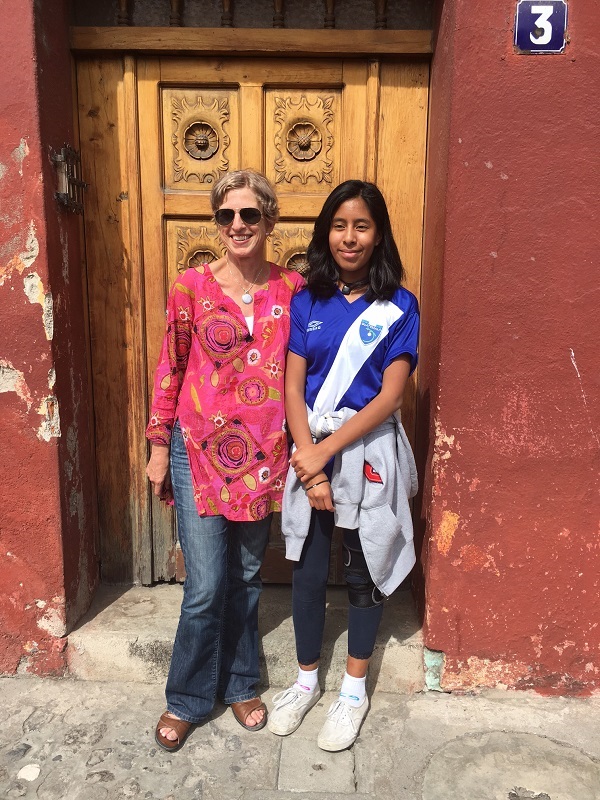
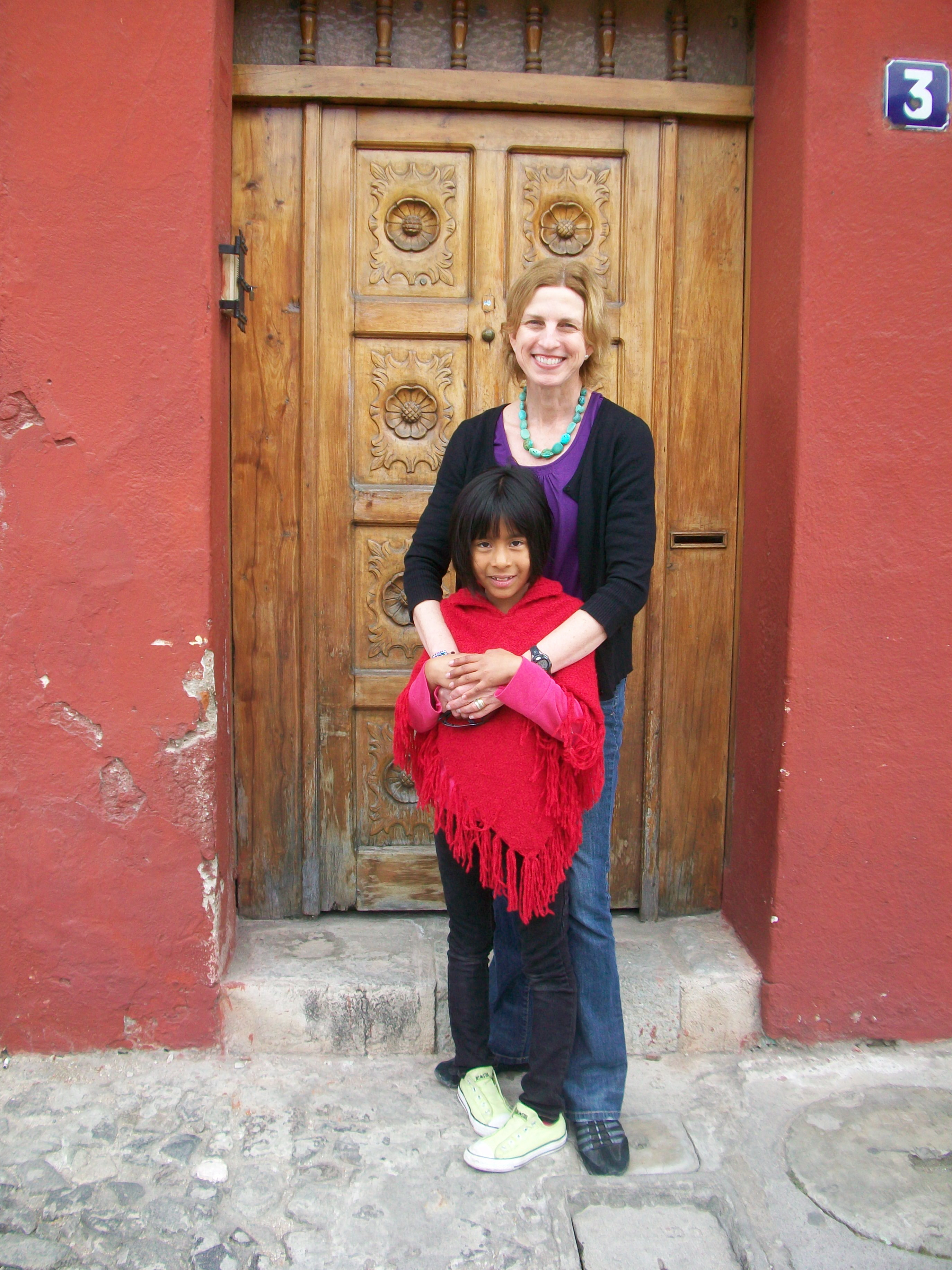
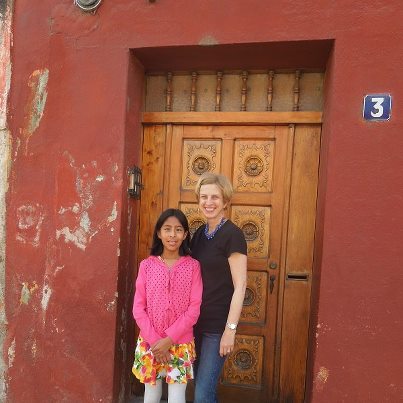
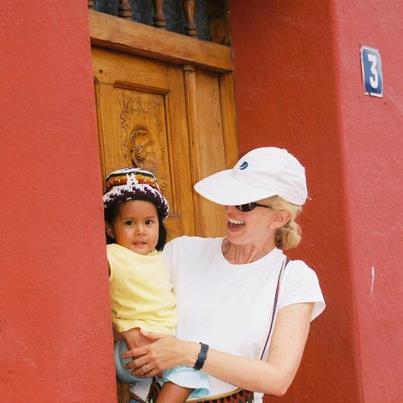
Olivia and I in Antigua, and the front door of the house where we lived when I fostered her in 2003.

Us in 2003.

For us, no visit to Antigua is complete without a pilgrimage to this place.

So happy to be here! ~

ShareThis

New book about international adoption, “Carried in Our Hearts”

Monday, March 18th, 2013

I’m thrilled to announce that Adoption Under One Roof blogger Lisa S has contributed an essay to a new and important book about international adoption, Carried in Our Hearts: The Gift of Adoption – Inspiring Stories of Families Created Across Continents. Authored by Dr. Jane Aronson and published by Tarcher, the book will be released on April 18, and is available for pre-order now, in both hard cover and Kindle formats.

Carried in Our Hearts: The Gift of Adoption comprises a collection of essays written by adoptive parents whose families have been cared for by Dr. Aronson, aka “the orphan doctor,” during the past 20 years. The stories reveal the deep and complex emotions felt by adoptive parents, and will resonate with anyone who has embarked on this transformative journey. The chapters are divided into ten thematic sections–“The Decision,” “The Journey,” “The Moment We Met”–each introduced with an essay by Dr. Aronson. Throughout the book, Dr. Aronson discusses the arc of her life, from pediatrician, to adoptive mother, to founder of the international foundation, Worldwide Orphans; and her ongoing commitment to the “children left behind.”

For each book you purchase before April 18, Tarcher will donate $1 to Worldwide Orphans. Going forward, a portion of the book’s proceeds will continue to benefit the foundation.

Order your copy of Carried in Our Hearts today! I did, and cannot wait to read it. Particularly the contribution by Lisa S!

Congratulations! ~

Image Credit: Tarcher Publishing

ShareThis

Mateo’s new suit

Friday, March 1st, 2013

If you’ve been reading this blog for a while, you’ve probably figured out that I’m Catholic, and my husband and I are raising our kids Catholic. What does that mean, exactly? A lot of things, which I won’t go into here because I believe every religion is valid and to be respected, as is the choice of no religion at all, by the way, and I’m not telling this story as a platform to discuss my faith.

No, my reason for bringing up Catholicism is to share the experience of buying for my son Mateo his very own First Holy Communion suit, from the charming purveyor of First Holy Communion suits in the photo above, who practices his fashion genius somewhere in the depths of the municipal mercado in Antigua, Guatemala.

In February 2012, Mateo and I had bought a suit from the same distinguished gent, intending to save it for the Sacrament this April. What we hadn’t counted on was Mateo’s growth spurt, which  steered the original suit pants and jacket dangerously toward clown costume territory.

But try finding the same tailor in the maze of the mercado! My remembered directions sounded like this: “Walk down the right side aisle, through the section with the pirated DVDs, past the candles and flowers and soccer balls, turn left at the section with the raw meat hanging, through the wrapping paper and baskets and candy, past the shoes and wallets and leather belts, beyond the place with the sacks of rice and beans and the guy who sells machetes. Somewhere around that.”

Fortunately, the lady in the First Communion dress section knew exactly where the tailor who sold First Communion suits was headquartered, and she kindly escorted us to the proper stall. Success!

Not shown here are the suit’s handsome complementary items: the white ruffled shirt, the black bow tie. For that, we’ll have to wait for Mateo’s First Holy Communion “big reveal.”

Stay tuned. ~

ShareThis

Heritage Camp registration opened today

Friday, February 22nd, 2013

Hi Friends:

If you’re thinking of attending Heritage Camp for Adoptive Families in Colorado this June, register soon. The deadline is sometime in April, but the camp fills up fast.

We’ve attended four times, and have loved every minute. As I’ve written before, the camp provides a very specific experience—that of being a child of color, from a different country, adopted to parents who often don’t look like you, among other children and families who share that specific experience. It’s not the same as visiting one’s home country—which Mateo and I are doing now—but in its way, is equally valid. Everyone I know who has attended raves about the camp, and plans to go back. That’s why I urge you to sign up today. ~

Here’s the link.


ShareThis

It’s here! The documentary “Stuck”

Wednesday, February 13th, 2013

The long-awaited documentary Stuck, produced by adoptive dad and Both Ends Burning founder Craig Juntunen, is now in theaters across the US in limited screenings. Previously, I wrote about Stuck and Craig Juntunen here and here.

What I love about the movie is that Craig put faces and personal stories to the abtract idea of “children without families, somewhere out there in the world.” I thought I couldn’t cry anymore about adoption, but after watching the film trailer, I know now that I can.

In previous posts, I’ve lamented the lack of leadership in international adoption, and how, among our elected officials, no one seems to be leading the charge. May I please amend that statement? Senator Mary Landrieu advocates for adoption non-stop. She is everywhere, all the time. Certainly in Craig’s film,  but also Skyped into a broadcast I watched recently on Guatemala television, lobbying in Congress, at conferences, and on the ground in countries where adoptive parents continue to wait for their cases to untangle from miles of red tape while their hoped-for children grow up without them. I’m sure I speak for thousands of others when I say “Thank you, Senator Landrieu.”

Last summer, in the days leading toward the fifth anniversary of adoptions being closed in Guatemala, I was so demoralized thinking about the unresolved cases, and the future of the children who live in institutional care, that I despaired of ever seeing change being made. Craig Juntunen’s movie gives me  hope.

Please watch the trailer, share with friends, and check the film’s itinerary. Craig and his team are embarking on a cross-country bus tour, and seek volunteers to help promote the film along the way. Details are on the website.

Onward. ~

ShareThis

Wall Street Journal on “Cheating the Orphans”

Monday, February 4th, 2013

There’s nothing technically “new” in this clip about Guatemalan adoption, “Cheating the Ophans,” posted by the Wall Street Journal, except for the fact that the Wall Street Journal believes the state of adoption in Guatemala—closed since December 2007, some 100+ cases unresolved, with no signs of reopening—deserves to be recognized. As far as I’m concerned, that’s new enough, and great news, building on a recent spate of articles that question the wide-scale closure of adoption programs with no exit strategy or “Plan B” in place.

First, in December, a front-page article about the Guatemala 900 in the New York Times, then protests in Russia by Russian citizens who disagree with Putin’s decision to stop adoptions to the US, followed by a story about the Krygrz 65 in Time magazine, and now, an editorial and news clip by the Wall Street Journal. Maybe this critical mass of media coverage will lead to meaningful reform and the reopening of programs long closed. 

In the clip where she is shown discussing the situation in Guatemala, Mary Anastasia O’Grady, “The Americas” columnist for the WSJ, registers the incredulity common to people who operate in a world of logic and sense: She cites the “high number” of children living in orphanages, at the same time that ”loving homes” await them. Why is this allowed to happen? O’Grady wants to know. She states that the waiting families of the Guatemala 900 are emblematic of a broader problem: “You have children who the mother can’t take of, and parents–plenty of them–who want them… The net effect is that these children are basically institutionalized. I think that is a crime.”

Ms. Grady, so do a lot of other people.

In the video clip, which I urge you to watch, O’Grady touches on the subject of the State Department, giving the bureaucracy props for trying, while noting that its pace is “glacial.” She also observes that children with special needs are “especially harmed” by adoption closures because many US adoptive parents, unlike adoptive parents elsewhere, will specifically adopt children with special needs. (To which I would add my observation and experience that every child who has been institutionalized or in foster care has ”special needs,” although that is a subject too complicated to address here.)

Finally, O’Grady comments on a “horrible prejudice… that a child born in Guatemala can’t grow up in New Jersey.” I loved hearing her say a “horrible prejudice,” because of course that particular argument is used over and over again by people who are anti-international adoption.

Watching this clip reminds me that many people who don’t “live” in the world of international adoption view adoption as a loving, permanent, and straightforward solution that makes sense. What they don’t understand is why, in this great big world of ours filled with smart people, nobody can seem to devise a way to make it work.

 Me, either.


ShareThis