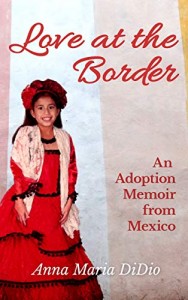
A kids’ book with a (subtle) adoption theme

January 25th, 2012

I’m forever on the look-out for books that my children will enjoy reading and/or listening to me read, a task more daunting than it may appear. Olivia and Mateo know what they like, and it’s not everything. My unscientific research reveals a few surefire elements: likeable characters around 7 and 9, the same ages as my kids; a fun and engaging plot that’s not “too scary”; and a cast that includes cute, furry animals, preferably small.

So when a friend recommended Susan Clymer’s There’s a Hamster in My Lunchbox, published in 1994, and gave it this review: “Sweet school-kids. Not scary at all. A cute, furry Teddy Bear hamster named Squeaks.  Oh, and by the way, the main character is a girl named Elizabeth, who was born in Honduras and adopted by a single mom from Kansas,” I took note. A chapter book about a cute, furry hamster that also featured an adoption theme? I ordered a copy that afternoon. (Used, on Amazon; the title is currently out of print.)

As I introduced the book to my kids I made no mention of the underlying theme, but when I got to page six and read this paragraph about the hamster known as Squeaks–

“Can we adopt her?” Elizabeth asked softly. She knew all about adoption. She had been born in Central America in a country called Honduras. Mom had adopted her when she was a baby. Her little sister had been adopted, too. –

Mateo turned to me with wide eyes, and in a voice filled with wonder said, “Elizabeth’s adopted too!”

Olivia, less impressed, said nothing, but the fact registered. I know this because a few chapters later my daughter said, in the world-weary tone of an older, wiser sister, ”I’m tired of thinking about adoption. Can we move on?” 

In our home, adoption is a subject that’s discussed, debated, and dissected, and has been for many years. Maybe too much, too often? Reading the book together gave Olivia a way to communicate the complexity of her feelings about adoption, without having to tell me directly. Sometimes, she’d just rather not think about it, thank you very much. That’s important information I need to hear, too.

Two thumbs up from us for There’s a Hamster in My Lunchbox. Even without the adoption theme, the book is a good, fun read.

ShareThis
2 Comments

Article on the idea of adoption, from a Latina point of view

January 18th, 2012

 I rarely read articles about adoption that are written from the point of view of Latina women–not that they’re not out there, perhaps, but I rarely see them–which is why this essay in Being Latino Online Magazine by Nancy Sepulveda, Adoption or abandonment, caught my eye. Below is an excerpt, with interesting and informative links.

The Latino community often still frowns upon adoption, and fewer domestic Latinos are adopted annually. This disapproval seems less rooted in concern for the mother’s experience and more in the perception that it is evidence of a sinvergüenza: “what kind of woman could give up her own flesh and blood? No tiene corazon!” 

Moreover, the focus on familia and the belief that nobody could care for a baby (or a grown man) more than his madrecita is a cornerstone of Latino culture. Latinas are seen as nurturers, providers, makers of the home (even if she is not a homemaker). The reverence for the ultimate mother figure (the Virgen de Guadalupe) alone is testament to the value of maternity in Latinidad. So it’s not surprising that many Latinos might equate adoption with abandonment, and write off a birth mother as a woman who does not cherish the paramount values of family and sacrifice. 

But I would counter, that to give a child up for adoption is the ultimate unselfish sacrifice. It is more inconvenient, more indiscreet, and more painful than simply aborting an unwanted pregnancy (calm down, fellow Pro-Choicers; just making a comparison). 

A birth mother has recognized that she is not ready or able to provide the resources a baby requires, yet is not denying that baby its own future choices. She has committed to dealing with morning sickness, mood swings, back aches, exhaustion, frequent urination, swelling, stretch marks, and all the other joys pregnancy brings (not to mention the pain of childbirth). She’s done so, perhaps in the face of disapproval from relatives and friends, while navigating the awkwardness of well-meaning people peppering her with questions on name choices and nurseries, all without the eventual promise of a new miracle in her life to “make it all worth it.” 

She’s also not the woman with seven kids who neglects or abuses them all – or allows her novio to do so… 

No, adoption is not for everyone. Obviously it’s a big decision that requires careful consideration of many factors, and ultimately not everybody should choose it. But it’s time to stop the judgment and denigration, and re-examine the assumptions we make about those who do.

I appreciate Sepulveda’s point of view, and her call to stop judgment and denigration of women who choose adoption as a personal decision right for them.

ShareThis
2 Comments

An interview with “Maya Roads” author Mary Jo McConahay

January 9th, 2012

After reading Mary Jo McConahay’s book, Maya Roads: One Woman’s Journey Among the People of the Rainforest (Chicago Review Press), I wanted nothing more than to get on an airplane bound for Guatemala, hop on a bus headed to the country’s interior, and begin exploring.  In Maya Roads, Mary Jo creates a vivid account of her experiences by drawing on her three decades of traveling, working, and living in Central America. Of the book, Peabody Award-winner Richard Rodriguez (author, Brown: the Last Discovery of America) wrote, “From enchanted jungles at the center of the Americas all the way to military roadblocks and nightmare massacres, [McConahay is] the best sort of guide… I cannot imagine a better chronicler of this time and place.” Laura Fraser (author, An Italian Affair and All Over the Map) said “From the moment Mary Jo McConahay steps into the deep Mexican jungle, you will follow her anywhere.”

Mary Jo began her career as a freelance journalist in Mexico; became a staff reporter for the Arab News, in Saudi Arabia; and reported for the Paris-based International Herald Tribune, and London-based economic magazines. She covered the Central American insurgencies for a decade for Pacific News Service, and U.S. newspapers such as the San Francisco Examiner and Chronicle. Mary Jo’s work has been published in Time, Newsweek, Vogue, Rolling Stone, Ms., Salon, Sierra, Los Angeles Times Magazine, Parenting, The Progressive, National Catholic Reporter, and more than two dozen other magazines and periodicals. She may be best known to adoptive parents as the co-producer of Discovering Dominga, a documentary about a 27-year-old woman born in Guatemala who was adopted at age 11 by American parents, after surviving a massacre on her Maya village.

Recently, I caught up with Mary Jo to ask her a few questions about Maya Roads: One Woman’s Journey Among the People of the Rainforest. She responded via email from Antigua, Guatemala.

I agree with Don George of National Geographic Traveler, who said of Maya Roads: “In its hungry passion and wide-eyed wonder, it’s an extraordinary literary journey and a moving testament to a region and a life.” Can you talk a little about where your passion for the Maya people, archaeology, and rainforest originates?

When I was in my twenties, studying Spanish in Mexico, I saw a museum exhibit about the Lacandon Maya Indians who still wore their hair long, hunted with bow and arrow, and were said to live much as their ancestors had lived in the remote southern jungles of Chiapas.  The idea fascinated my romantic mind, and I set out on a whim to visit them.  The beauty of the Maya rainforest, its dense and varied forms of life, the remains of the magnificent pre-Columbian cities — all of it captured my imagination and never let go. Over many years as a journalist and resident of Guatemala, and through friendships, I came to know better the reality of the lives of modern Maya.  I continue to admire their traditions and ancient history, but even more now I respect how the Maya survived recent incidents of genocide at the hands of a brutal army, their push for education, and the movement toward a pan-Mayanism that demands recognition of indigenous rights and customs.

You have a long history with Guatemala and Central America, covering the region as a war correspondent, and living with your husband and daughter in Antigua for 11 years. In the years since you’ve known Guatemala, what changes have you witnessed?

When we first moved to Antigua as a family in the late 1980s, we knew everybody by first name in the “foreign” community, often Europeans or North Americans who had made their lives here.  A post-war business and investment boom has changed all that, with many newcomers.  Increased security also means increased tourism country-wide, which is great for the economy; Guatemalans invest more in their own country now than before with businesses springing up big and small.  The atmosphere of militarization, thankfully, with soldiers in camouflage ubiquitous, seems gone. A huge change is an improvement in communication. There were so few phones in the first years we communicated with our friends in some towns by telegram, which had to be translated into Spanish before sending for security reasons (“How about dinner Friday?”). Now it seems every Guatemalan has a cel, and the country is wired.  It’s wonderful.

 What advice do you have for someone who would like to follow in your footsteps today and explore areas in Guatemala not on the usual “tourist path.”

Be smart, as you would traveling anywhere, but don’t let excessive caution cauterize your curiosity.  We just watched the sun rise at a little-visited Maya site near Tapachula, Mexico, then took a  7-hour bus ride along the coast to reach Guatemala City.  From here in Antigua where we are on a family visit, our daughter, now 25, and her boyfriend made a recent shuttle trip to Lake Atitlan and visited its small villages with local boatmen.  They took a day to climb Pacaya volcano.  Start easy and make sure you speak a little Spanish — it’s not hard to memorize a short list of words at least, which can make a big difference in your journey.

You interviewed Rigoberta Menchu in 1992, on the day the Nobel Peace Prize committee announced her name as the 1992 recipient. How did that come about? Any impressions you can share? 

Rumors had been floating that Rigoberta could receive the prize, although she was considered a long shot, but I calculated the time difference from Oslo and set my alarm in a San Salvador hotel room for 4:00 a.m., just in case. When it rang I opened my eyes, pressed the remote and bang, there was her round, smiling face.  I didn’t even listen to the announcement, raced madly to catch the first flight to Guatemala City, where on board I was lucky enough to get quotes from some government figures who hadn’t heard the news.  I went to the headquarters of the indigenous widows organization where I knew Rigoberta had to come sooner or later, and she did. There were so many well-wishers, in every sort of Maya traditional dress, and many non-Maya too, that it was impossible to talk, so we climbed up to the roof overlooking the city and volcano.  Someone brought the new Nobel Laureate a cold beer and we had a wonderful interview.  Soon enough a party of the widows found us, somebody put on a marimba casette, and I left her on the roof dancing the elegant son with the other women.

While writing the book, did you learn anything about Guatemala or the Maya that surprised you?

No outright surprises, but many unexpected delights, and entries into corners of recent history that had been fairly hidden. I saw that social and political resistance by indigenous such as we have seen in our lifetime is not unique, but part of a cycle that will not end until the chance for a dignified life is available to all, Maya and non-Maya.

Do you have any projects currently?

I continue to do readings and speak on the world of Maya Roads, including for book clubs, churches and interest groups.  At the same time, I am working on a book about Allied and Nazi espionage and counterintelligence in Latin America during World War II, a time when much of this hemisphere admired fascism.  Having seen it up close, I live appalled by the human cost of any war, and I’m moved to know more about the motivation and history of those who participated in the big one, from Brownsville to Brazil.  I’m making some interesting discoveries.

Learn more about Mary Jo at her website, maryjomcconahay.com; and about her new book at mayaroads.com.

ShareThis
5 Comments

Certificate of Citizenship, now more than ever

January 6th, 2012

The recent news story about a 15-year-old Dallas, Texas teen who was deported to Colombia after giving immigration officials a false identity reinforces the importance of obtaining a Certificate of Citizenship for any child who is adopted internationally. If your child was admitted to the United States under an IR-3/IH-3 visa, you should receive a Certificate of Citizenship automatically within 50 days. If you didn’t receive a Certificate of Citizenship within 50 days, or if your child’s name has changed, you will need to fill out a Form N-600. I won’t try to walk you through the process, but I will post a few helpful links from US Citizenship and Immigration Services (USCIS):

Overall explanation of Certificate of Citizenship for your Internationally Adopted Child

Adoption Based Forms

Application for Certificate of Citizenship (Form N-600)

Application for Replacement of Naturalization/Citizenship Documents (Form N-565)

While you’re at it, you can also apply for a Return of Original Documents by filling out the G-884. The process can take months or years–I won’t bore you with my number of go-rounds before the CD containing the information arrived–but believe me, the reward of a complete adoption file is worth it. And, unlike almost every other form you’ve filled out, this one is free. ~

ShareThis
Comments

100-year-old California woman and 57-year-old Nebraska man reunite with birth families

January 3rd, 2012

Today I read two amazing articles that remind me again of how powerful the bonds of biological roots are to people involved in adoption–both as a person who is adopted, and as a parent who relinquished a child. The first recounts the story of a 100-year-old California woman who gave up a daughter 77 years ago. The second is about a 57-year-old man in Nebraska who searched for and found his birth siblings and other relatives.  Happy 2012!

Mom reunites with biological child 77 years later

SAN CLEMENTE, Calif. (AP) — For most of her 100 years, Minka Disbrow tried to find out what became of the precious baby girl she gave up for adoption after being raped as a teen.

She hoped, but never imagined, she’d see her Betty Jane again.

The cruel act of violence bore in Disbrow an enduring love for the child. She kept a black and white photograph of the baby bundled in blankets and tucked inside a basket.

It was the last she saw of the girl — until the phone rang in her California apartment in 2006 with the voice of an Alabama man and a story she could have only dreamed.

 57 years after adoption, Nebraska man finds family that had only existed in his imagination

A few days before Christmas, Orion Knee got a telephone call from his uncle, Don Frazer, in Omaha. “I think you’ve got a brother,” his uncle said. “I was blown away,” Orion said. He had no idea that his mother had given up a child for adoption 57 years ago, before he was born. Recently, in north Lincoln, the two brothers met for the first time.

Rick Nolze, 57, of Clearwater in northeast Nebraska, was welcomed into a family that a few weeks ago only existed in his imagination. “I’ve got aunts and uncles I didn’t know existed. I’ve gotten hugs… And that guy over there looks like me,” Rick said, pointing to his uncle, Frazer, a few feet.

Rick is grateful for the love and care of his adoptive parents, Fred and Shirley Nolze. He doesn’t want his search to take away from the wonderful life they gave him.”I felt like the prodigal son. They put a robe on my back and a ring on my finger and said, ‘This is my son.’”

But he’s always been curious about his birth family. He has his original birth certificate (Larry Dean Knee) and was aware from adoption records that he had an older sibling.

ShareThis
1 Comment

An article about a Guatemalan midwife

December 27th, 2011

Here’s a link to Guatemala’s Golden Midwife, a fascinating and informative article by Catherine Porter of the Toronto Star, mostly about traditional birthing practices among indigenous women in a rural area in Guatemala, but also about the complexity of modern life for many Guatemalans.

SAN JUAN OSTUNCALCO, GUATEMALA—Another woman arrived early this morning at Ruth Ana Maria Perez’s house, across from a small corn field on the very edge of town.

She lies now in Perez’s concrete, purple front room, on a green plastic mattress tucked into a turquoise wooden bed. It is cold and damp; the rain pours down every afternoon. Perez checks her pulse, pulls a needle from a box in the glass cabinet near the bed and, after filling it with rociverine (a muscle relaxant), she pokes it into the woman’s exposed haunch.

“She’s five centimetres dilated,” Perez says. “This will help open her faster.”

Dona Ana, as she is known, is the most successful midwife in town. She delivered her first baby at age 11, when her mother — a midwife — was too ill to get out of bed. Since then, she has ushered 11,000 souls into the world, up to 10 a week during a full moon.

Her success glows from her mouth — a row of gold stars embedded in her top teeth. Her butter-coloured two-level house is grand by local standards. There are two cars parked out back. And she can afford the cabinet of swabs, medication, surgical scissors and latex gloves.

She has never been trained to use any of it. Nor was she trained, formally or informally, to attend births. Like most Mayan midwives, Perez considers her midwifery a “don” — a skill she was born with.

***

Almost 500 years since the Spanish infantry conquered the Mayan K’iche’, Guatemala remains a divided country. There are the Spanish-speaking Ladinos, with their jeans, light skin and briefcases, who live in the southern cities. And there are the Mayan descendants, who live in the north and western highlands, tilling the milpa — corn fields — in their skirts and huipels. They speak their own languages — 21 Mayan languages are used in Guatemala — and retain many of their customs and beliefs, including those of medicine.

For Mayans, illness results from imbalance, often between hot and cold. Their main curative is the tuj — steam bath. They are behind most houses: waist-high, made of mud bricks or cement, with just enough room inside for a bench and fire. The tuj is considered especially important after birth, when a woman has lost much “hot” blood.

It doesn’t matter how well-equipped or even beautiful a hospital is — the regional San Juan de Dios hospital in Quezaltenango is sheltered by whispering pine trees — for many Mayans, it is a symbol of colonial oppression.

Even Mayan doctors I spoke with say they feel degraded in Ladino hospitals when they arrive as patients. They are made to change into thin hospital gowns, showered, and then taken to a sterile birthing room to deliver their babies alone, without the support of family.

That’s standard practice, the obstetricians at San Juan de Dios told me. But, the Mayan women don’t understand. Despite the prominent sign declaring every pregnant woman will be treated in her own language, doctors acknowledge none of their colleagues speak Mam, the predominant language of San Juan Ostuncalco. The sign is written only in Spanish.

***

[Dona Ana's] current patient lies corpse-quiet in the turquoise bed. She whispers that her name is Lorenza Augustin. She’s 33. She is from Las Barrancas, the canyons — a rural village two hours away by twisting dirt road. Her family farms corn and squash. She has never been to school. She speaks only Mam.

This is her fourth baby. Her three daughters were born in her bed at home. A urinary tract infection early in this pregnancy spooked her family. They decided going to Dona Ana, with her Western medical supplies, would be safer.

They are hoping for a boy.

“Aye,” Augustin says softly, as Dona Ana massages her hips to ease the pain and get her to dilate faster. It’s her version of an epidural — her glass cabinet contains no pain medications.

Dona Ana pulls a chair beside the bed and waits. The room is quiet. A wall clock ticks. Augustin’s breath quickens to a pant during a contraction and then falls silent again.

“She’s very brave,” Dona Ana says.

***

Two days later, Augustin is back in her own bedroom, resting beside her baby in one of two double beds. Her mother-in-law and nieces flit around, bringing cups of hot chocolate and bowls of beef broth. These are considered “hot” foods by Mayans, unlike green vegetables and white meat. For 40 days, while she recovers, Augustin will only eat hot food.

She will stay in bed for that entire time.

The house, which overlooks a lush green valley of trees, is as big as Dona Ana’s. Husband Rogelio Delgado built it with his brother five years ago, using money they had saved while working construction jobs illegally in the United States.

It took him a year to pay off the debt to his smuggler after his first clandestine trip to California eight years ago. Since then, he has snuck across the Arizona desert twice more, sending money home every month. He shows off a large American fridge in the kitchen — a real luxury here — and a bathroom shower, both of which he shipped from California.

Both came at a price.

“My third girl, Sandra Valeria, she was 5 weeks old when I left the last time. When I came back, she was more than 5 years old. She just knew me by my picture. She didn’t come close to me for 15 days,” Delgado says.

The family tuj is next to the driveway. Augustin’s mother lit a fire in it last night, and boiled a giant pot of water for her newest granddaughter’s first sauna. Then, Augustin and her baby went inside together.

The baby still hasn’t been named.

“We are thinking about either Kimberly or Lorenza, like her mother,” Delgado says. The extended family will decide together.

Two things are certain. Her life will be much more comfortable than her mother’s. A school has been built down the valley. Her sisters walk there every day. Her world will expand beyond the milpa, where her mother started working at age 5.

Second, she will grow up in a household of women. Delgado is planning to return to California soon.

ShareThis

Comments

Merry Christmas and Season’s Greetings~

December 24th, 2011


Christmas is still a magical time for my children, and I hope it always stays that way. We’re lucky to be spending the holiday with family in San Diego–my parents, all five of us siblings, nieces, nephews, friends, and significant others.

I’m enough of a realist to know that days like these don’t come often, so I’m cherishing each and every moment.

Sending you warm wishes for a joyful winter season. ~

ShareThis

3 Comments

Adoptive dad Gil Michelini’s book, “Daddy, Come & Get Me”

December 16th, 2011

As a first-time author, I know how difficult it can be to convince the world to notice a new book by an unknown writer. Thus, when my fellow adoptive parent and Facebook friend, Gil Michelini, asked me to read his personal account of adoption from Guatemala and post about it, I quickly agreed. Gil and his wife, Fran, were biological parents to three daughters when Gil felt his calling to adopt. The book Gil wrote about the experience, Daddy, Come & Get Me (Emiliani Publishing), traces the couple’s journey to become parents to the girl they named Gemma. Gil describes Daddy, Come & Get Me as “the first memoir of an American dad’s adventure following his calling to adopt a daughter from Guatemala.”

Daddy, Come & Get Me is available as a physical book ($14.95) as well as in the Kindle ($2.99) and Nook ($2.99) formats.  For details, visit Gil’s website www.DaddyComeAndGetMe.com and select a vendor from the ones listed across the top of the page, or order through your local bookstore. Please note: Daddy, Come & Get Me contains strong religious themes.

Recently, I caught up with Gil to ask him a few questions about his story and the writing process.

What gave you the idea to write your book?

I knew when we brought Gemma home that this was a story that had to be told. The only problem was that the Gil I was at the time was not a person who could tell it through this medium. I had to be humbled and clear out a lot of my baggage I had been carrying around. Five and a half years after bringing Gemma home, I was finally the right person to start this project.

Holding Daddy, Come & Get Me is a thrill because I struggled with the basics of the American language while in school. Writing a book was a lifelong dream. Continue… »

ShareThis

Comments

Article from India discusses relationship between surrogacy and adoption

December 12th, 2011

I believe family-making is an intensely personal choice. What’s right for me may not be right for you, and vice-versa. For some people, IVF, embryo or sperm donation, or surrogacy makes sense. For others, private adoption where a birth mother chooses the adoptive parents is the right choice.  Some 114,000 children are available for adoption through US foster care. That process best-suits many. It’s crucial that individuals know what makes sense for them, so they are able to be the best parents they can be to their children. If international adoption feels like the right choice, as it did for my husband and me, so be it.

Having stated that caveat, I’m posting a link to “Why Surrogacy Doesn’t Need a Celebrity Role Model,” by Lakshmi Chaudhry on the India-based website Firstpost. Chaudhry discusses the actions of Aamir Khan and his wife, who opted to discuss publicly their choice to add a child to their family through surrogacy.

The article interests me because it touches on the relationship between surrogacy and adoption, and how the increasing numbers of the former correlate to the decreasing numbers of the latter. In no way am I advocating for one method of family-making over another; nor am I excusing corrupt practices in either. I’m simply noting the relationship between the two.

Chaudhry writes:

Surrogacy satisfies the natural urge for a biological child that is genetically our own. Medical science now offers surrogacy as a last resort option for couples who may have remained childless. More importantly, it is also becoming a choice for couples who would have otherwise chosen to adopt. The number of surrogacy-assisted births are growing worldwide even as the numbers for adoption are on the decline.

In recent years, responding to cases of child trafficking and kidnapping, governments across the world have cracked down on inter-country adoptions. This laudable effort, however, has had an unintended effect, as reproductive health expert Karen Smith Rotabi notes:

With this new system, combined with problems like the recent adoption scandals in Russia and other nations, inter-country adoption has undergone radical decline and it is no longer the opportunity it once was for building families. In the US, the practice peaked in 2004 with 22,990 children sent to the nation as adoptees as compared to only 12,753 in 2009. As adoption has become more difficult, the global surrogacy industry has begun to surge to meet the fertility demands of individuals and couples seeking to secure healthy infants.

As a result, nations like India and Guatemala are instead becoming surrogacy destinations, where it is now far easier to rent a womb than to adopt a child.

Add to this the strict adoption procedures in the West, and you have increasing numbers of foreigners turning toward surrogacy as a quicker, less burdensome option. Continue… »

ShareThis

2 Comments

Podcast on “Corruption in International Adoption”

December 4th, 2011

The Chronicle of Philanthropy recently posted a podcast on “Corruption in International Adoption.” The segment, produced by Amy Costello, featured an interview with Jennifer Hemsley, an adoptive mother who was so concerned that her intended daughter had been kidnapped from her Guatemalan birth mother that she halted the adoption. Hemsley later discovered the girl had not been kidnapped; the child was moved to an orphanage, and ultimately placed in permanent foster care in Guatemala. Amy Costello also interviewed Erin Siegal, author of Finding Fernanda, a new book about corrupt practices in adoptions from Guatemala.

Unlike some of the reportage I read about international adoption, I found Costello’s interview to be thoughtful and well-researched. At the same time, I felt she was presenting only one side of a very complex issue. Thus, I engaged with Costello in a dialogue on yet another blog, China Adoption Talk. You can listen to the original podcast and read our conversation by clicking on the China Adoption Talk link.

Below are excerpts from my comments:

As everyone agrees, corruption in international adoption must be identified and weeded out, a monumental task to be sure.

But I think it’s important to view the subject of “money” in international adoption within the context of all adoptions, as well as within the context of the often-overlooked but related fertility “industry.”

I’ve spent the past year speaking to groups of parents about a book I wrote about adoption from Guatemala. Many folks tell me our international adoption was “cheap” compared with their private domestic adoption, and/or fertility treatments, and/or payments to donors and surrogates, both here and abroad.

One physician said he thought the high cost of international adoption could be linked to the high cost of fertility treatments in the US. Something to consider.

None of which excuses corrupt practices in international adoption. But it seems as though international adoption often is reported in a vacuum, when in fact it’s part of a wide spectrum of ways to create a family, most involving money that changes hands.

***

As a fellow adoptive mom with children from Guatemala, I feel deep empathy for Jennifer and her family’s struggles. Her responses definitely resonate for me, as they probably do for others who have adopted from Guatemala and spent any time there. As my lawyer once told me, “This is not Paris. This is not Argentina. This is Guatemala. Things are different here.”

Enough said.

A number of adoptive parents have shared with me their nightmare paperwork stories, including false names or addresses, or a boilerplate social worker report. This is especially hard because many APs with children from Guatemala want to connect with birth parents, and inaccurate information makes that impossible: children will never be able to trace their biological roots, and birth mothers are unable to be found. I consider that a tragedy.

However, for me, false paperwork is a far cry from kidnapping or coercion, although they are often all lumped together as “corrupt adoption.” (In California, where I live, for example, tens of thousands of residents are undocumented and use fake ID, but we don’t consider them “criminals.” Again, my opinion only.) Jennifer’s experience is a case in point: although the date on the DNA was wrong, the baby was not kidnapped. Yet the adoption is labeled “corrupt.”

***

Like you and others, including “orphan doctor” Jane Aronson, I absolutely support the idea of family preservation in-country. In addition to funds donated by “ordinary families around the world,” it would be great if governments of countries could step up efforts to assist their citizens by earmarking funds for family planning services, food, housing, and education.

That said, there will always be situations where a woman cannot or chooses not to parent her child. In those instances, international adoption can be viewed as one option.

Will international adoption ever be fully transparent? Maybe if enough people make enough noise, it will. In a country such as Guatemala, adoption of non-blood-related children is rare, so without international adoption, the alternative is a lifetime spent in institutional care. Jennifer’s account of her daughter’s orphanage experience was chilling, and unfortunately, not unique.

I’m grateful to Amy Costello for caring about international adoption, and for listening to what I had to say. Thanks, too, to Malinda at China Adoption Talk for giving us the space to air our thoughts.

If you have an opinion you’d like to share, please comment here or on either of the other two websites.

http://chinaadoptiontalk.blogspot.com/2011/12/podcast-exposing-corruption-in.html

http://www.tinyspark.org/podcast/adoption/

ShareThis

4 Comments